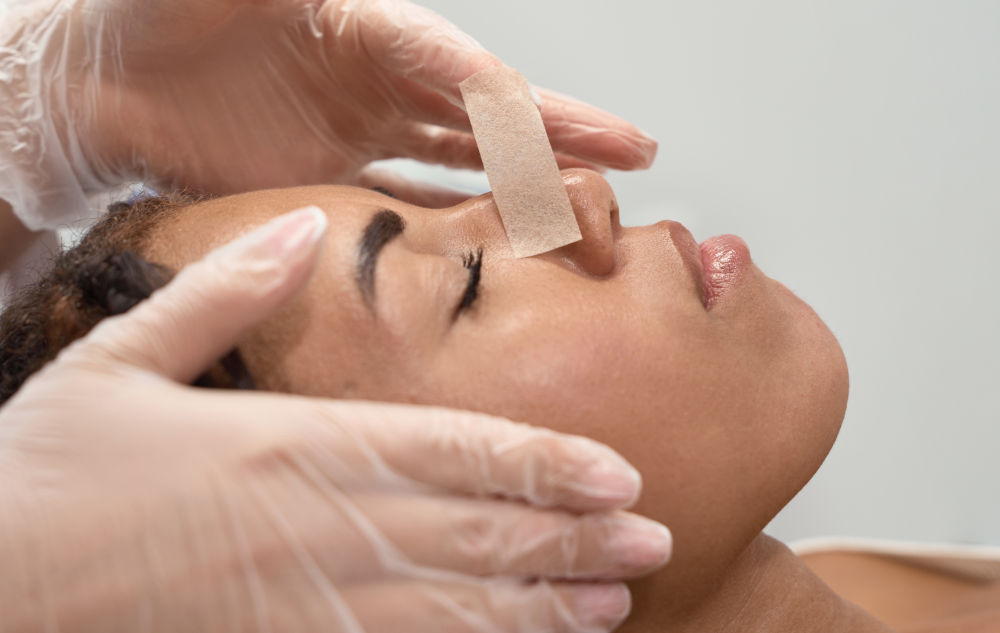
After rhinoplasty cast removal, you may find that your bridge looks broad or your tip still feels swollen. Seeing other patients tape their noses can raise another question: should you be doing the same?
Rhinoplasty taping after cast removal may help manage swelling in selected patients, but it is not necessary for everyone. It provides gentle compression to healing soft tissues. It cannot reshape the underlying bone or cartilage, correct a surgical problem, or replace the time your body needs to heal.
Whether taping belongs in your recovery plan depends on your surgery, skin characteristics, healing progress, and surgeon’s assessment.
Key Takeaways
- Cast removal marks an early recovery stage; swelling is still expected.
- Taping may help some patients, particularly those with thicker nasal skin.
- Research does not establish that everyone needs tape or that it guarantees better final results.
- Your surgeon should specify the tape, placement, pressure, and schedule.
- Increasing pain, unusual swelling, or skin damage needs assessment rather than additional compression.
Why Is the Nose Still Swollen After Cast Removal?
Rhinoplasty triggers inflammation and fluid accumulation in the tissues. The external splint protects the nose during early healing, but its removal does not mean those tissues have recovered completely.
Dr. Rival’s rhinoplasty recovery timeline explains that the splint and stitches are generally removed about five to seven days after surgery. Once the covering comes off, remaining puffiness becomes easier to see.
The bridge, tip, and nostril area may look fuller than expected. Swelling can fluctuate over the following weeks and months, and different areas settle at different rates. Nasal tip recovery often takes longer, so an early rounded appearance does not establish the final shape.
What Is Rhinoplasty Taping?
Nose taping after rhinoplasty involves applying surgeon-approved medical adhesive tape to the nasal skin. Gentle compression may limit temporary fluid accumulation and help the skin settle over the reshaped framework.
Think of it as a light external support for swollen soft tissues. Its purpose differs from the initial protective cast, and it should be used only when your surgical team recommends and demonstrates it.
Nasal Cast vs Nasal Taping
| Factor | Rhinoplasty Cast or Splint | Taping After Cast Removal |
|---|---|---|
| Main purpose | Protect the healing nose | Gently compress soft tissues |
| Material | Rigid or semi-rigid support | Medical adhesive tape |
| Timing | Immediately after surgery | Sometimes prescribed after cast removal |
| Duration | Often approximately the first week | Individualized |
| Structural role | Provides external protection | Cannot replace internal structural support |
| Used for everyone? | Depends on the procedure and protocol | No |
Does Taping Actually Reduce Swelling After Rhinoplasty?
A 2016 randomized trial in JAMA Facial Plastic Surgery studied 57 rhinoplasty patients. Researchers compared no additional taping with two or four weeks of taping after the external dressing was removed.
Ultrasound measurements showed improvement in average nasal tissue thickness with taping. Benefits were more apparent among patients with thicker skin; the study did not demonstrate a benefit in the thin-skin subgroup. Results also varied by location, and the effect at the nasal tip was not statistically significant.
A 2023 randomized study compared traditional taping with customized 3D-printed splints. The splint group had greater reductions in total nasal volume at six months and one year. However, there was no untreated comparison group, so the study cannot establish how much taping adds to natural recovery.
These findings support selective use. They do not establish that taping consistently improves long-term appearance or that longer use produces better results.
Dr. Rival also co-authored a 2026 study of compression taping and bruising around the eyes. That research addresses a different treatment area and outcome; it should not be interpreted as evidence for nasal taping after cast removal.
Who May Benefit Most From Nasal Taping?
Your surgeon considers skin thickness, swelling patterns, and healing progress.
Patients With Thicker Nasal Skin
Thicker skin can obscure definition for longer. It may influence the decision to recommend compression, although it does not automatically make taping necessary.
Patients With Persistent Soft-Tissue Swelling
Fullness around the bridge or supratip—the area just above the tip—may prompt an examination. The surgeon needs to determine whether it represents swelling and whether compression is appropriate.
Patients Recovering From Extensive Reshaping
The amount of tip or bridge work can affect recovery. Surgical technique and the condition of the skin also matter. Extensive surgery alone does not establish a need for tape; the recommendation should follow an individual assessment.
How Long Should You Tape Your Nose After Rhinoplasty?
There is no universal duration. Studies have tested two- and four-week courses, while the 2023 comparison used a 12-week protocol. These research schedules are not universal patient instructions.
Your surgeon should decide when to start, when to reassess, and when to stop. If you are Dr. Rival’s patient, follow the clinic’s personal instructions rather than extending treatment because someone online taped for several months.
Should You Tape Your Nose at Night or During the Day?
Some protocols include nighttime taping; others use different schedules or no additional tape. Sleeping with tape is not automatically necessary.
At follow-up, ask when to apply it, how long to leave it on, and whether your skin needs breaks. Wearing it more frequently than prescribed does not guarantee a better outcome.
How Is Rhinoplasty Tape Applied and Removed Safely?
Ask the surgical team to demonstrate the technique and provide written instructions. Placement may differ according to the areas treated and the location of healing incisions.
Use only the recommended medical tape and gentle pressure. Avoid experimenting with tighter application, extra layers, or techniques intended to push the nose into a different shape.
Removal should follow the clinic’s instructions without forcefully pulling on sensitive skin. If the tape is difficult to remove or causes discomfort, contact the team for guidance instead of repeatedly tugging at it.

Can Taping Change the Shape of Your Nose?
The surgical changes to bone and cartilage create the underlying result. Taping mainly affects the soft-tissue covering and temporary puffiness.
A nose may look slimmer after compression, but that does not mean its structure has become permanently narrower. Tape cannot reliably straighten a crooked nose, lift a drooping tip, or correct an unsatisfactory surgical outcome.
Stopping taping also does not automatically make the nose permanently larger or undo surgery. Discuss changes in appearance with your surgeon, especially before changing a prescribed routine.
What Are the Risks of Incorrect Nose Taping?
Possible problems include redness, itching, adhesive sensitivity, irritation near incisions, and skin damage from forceful removal. Excessive pressure can also cause discomfort.
Persistent redness, blistering, broken skin, or worsening pain should prompt contact with your surgical team. Do not keep reapplying tape over damaged skin while waiting for it to settle. Your clinician may need to adjust the product, technique, or treatment plan.
What If Your Surgeon Does Not Recommend Taping?
Aftercare can be complete without post-cast taping. Your surgeon may consider extra compression unnecessary given your anatomy, procedure, or healing pattern.
You have not automatically harmed your result by following a recovery plan that excludes tape. If you are unsure why another patient received different advice, ask at your appointment rather than adopting their routine.
Other Ways to Manage Swelling After Rhinoplasty
Follow your surgeon’s advice on rest, head elevation, and returning to exercise. Protect the nose from bumps and unapproved pressure, and attend follow-up appointments so the team can assess progress.
The rhinoplasty swelling stages can help put gradual changes into context. Your examination and surgical history provide individual context.
When Should You Contact Your Surgeon About Swelling?
Contact your surgical team promptly for:
- Sudden or rapidly increasing swelling.
- Pain that becomes significantly worse.
- Increasing redness or warmth, fever, or concerning drainage.
- A new injury to the nose.
- Blistering, broken skin, or worsening discomfort from tape.
- Significant new nasal breathing difficulty.
Persistent asymmetry or swelling that concerns you also deserves discussion, even without urgent symptoms. The guide to breathing after rhinoplasty explains related warning signs. Severe difficulty breathing requires urgent medical care. Adding more tape is not an appropriate response to sudden deterioration.
What to Ask Dr. Rival at Your Follow-Up Appointment
Follow-up with Dr. Richard Rival is an opportunity to assess healing and clarify your next steps. Useful questions include:
- Is this swelling expected at my recovery stage?
- Would taping help, and which areas would it target?
- Which tape, placement, and removal method should I use?
- Should I wear it overnight, and when should I stop?
- What changes should prompt a call to the clinic?
Frequently Asked Questions
Does taping your nose after rhinoplasty actually reduce swelling?
It may help selected patients. Benefits vary, and tape cannot eliminate the natural healing period.
How long should I tape my nose after cast removal?
Continue only for the duration your surgeon recommends. Ask for a reassessment if you are unsure whether to stop.
Should I tape my nose every night?
Only if your surgical team has advised it. An overnight routine is not a requirement for everyone.
Does taping make your nose smaller?
Reduced puffiness may make it look slimmer. Tape does not permanently reduce the underlying bone or cartilage.
Can taping help nasal tip swelling?
Possibly, but a consistent benefit specifically at the tip has not been established. Tip definition often develops gradually.
What happens if I stop taping?
Stopping does not automatically undo the operation. Follow your surgeon’s stopping instructions and ask about unexpected changes.
Can I start taping if my surgeon did not recommend it?
Ask first. Your surgeon can determine whether compression is suitable and show you the appropriate technique.
Can taping damage your nose?
Tight application or aggressive removal can irritate or injure healing skin. Report pain, blistering, or broken skin.
Why does my nose look bigger after cast removal?
Remaining swelling can make the bridge or tip appear wider. The appearance at cast removal is still an early recovery snapshot.
Is Rhinoplasty Taping Necessary for a Good Result?
Taping can be a useful part of an individualized recovery plan, but it cannot guarantee the outcome or substitute for appropriate surgery and healing time.
For questions about cast removal, swelling, or taping, speak with your treating surgeon. You can also request a consultation with Dr. Rival to discuss your concerns and appropriate next steps.