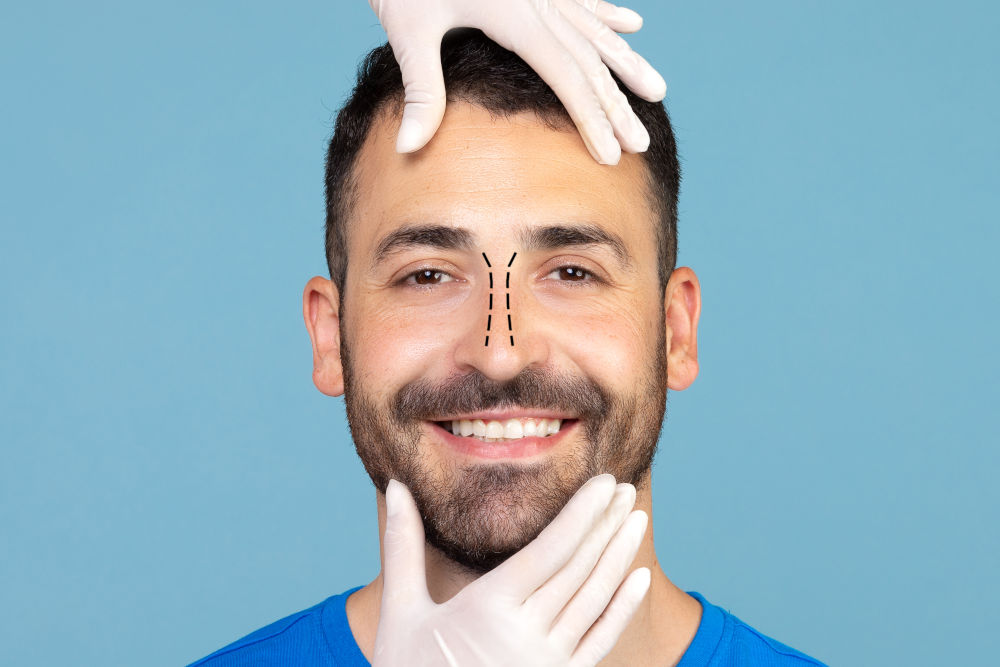
A crooked nose is often more personal than it looks from the outside. One patient may notice it only in photographs, when the bridge seems to drift away from the centre of the face. Another may be bothered by a tip that pulls to one side, or by nostrils that look uneven from below. In many cases, the concern is not just appearance. The same patient may also say that one side of the nose always feels tighter, that exercise makes nasal breathing difficult, or that sleep is affected because they breathe through the mouth.
That combination matters. A nose can look crooked because of the nasal bones, the lower cartilage, the septum inside the nose, the nostril base, or an old injury that changed several parts at once. Sometimes the issue is mostly cosmetic. Sometimes it is tied to nasal obstruction. Often, it sits somewhere between the two.
Rhinoplasty can improve the visible shape of a crooked nose. Septoplasty addresses a deviated septum inside the nose. Functional rhinoplasty looks at the support structures that help keep the airway open. When the outside shape and the airway both need attention, septorhinoplasty is often the more relevant discussion. The right plan depends on examination, breathing assessment, skin thickness, trauma history, and the patient’s expectations.
Table of Contents
- A Quick Orientation Before Choosing a Treatment
- Why a Nose Can Look Crooked
- When Crookedness Is Cosmetic, Functional, or Both
- Septoplasty, Rhinoplasty, Functional Rhinoplasty, and Septorhinoplasty
- How Rhinoplasty Straightens a Crooked Nose
- Crooked Nose After Injury or an Old Broken Nose
- Can Non-Surgical Rhinoplasty Fix a Crooked Nose?
- Recovery After Crooked Nose Rhinoplasty
- What Results Are Realistic?
- How to Know If You Are a Good Candidate
- FAQ
Key Takeaways
- A crooked nose can be caused by the nasal bones, cartilage, septum, nostril base, old trauma, previous surgery, or a combination of several structures.
- Rhinoplasty can improve the visible alignment of a crooked nose, but the surgical plan depends on where the crookedness starts and how the nose supports itself.
- Septoplasty focuses on the septum inside the nose and is usually considered when a deviated septum affects breathing.
- Functional rhinoplasty may be needed when airway support structures, such as the nasal valves or nostrils, contribute to breathing problems.
- Septorhinoplasty is often the most relevant option when a crooked nose affects both appearance and nasal airflow.
- Non-surgical rhinoplasty with filler can sometimes camouflage very mild unevenness, but it cannot straighten bone, cartilage, or the septum, and it cannot improve breathing.
- Crooked nose correction is more complex than simply moving the nose to the centre. Skin thickness, cartilage memory, trauma history, scar tissue, and healing behaviour all affect the final result.
- The goal is usually better alignment, improved facial balance, and better breathing when function is involved – not a perfectly straight or artificially symmetrical nose.
- Recovery can look uneven at first, especially after crooked nose correction, because swelling may settle differently from one side to the other.
- A consultation with Dr. Rival is the best way to determine whether rhinoplasty, septoplasty, functional rhinoplasty, or septorhinoplasty is most appropriate for your anatomy and goals.
A quick orientation before choosing a treatment
Patients often arrive after reading several terms online, but the procedure name only becomes useful once the cause of the crookedness is understood. A visibly angled bridge, a twisted tip, uneven nostrils, and one-sided blockage may come from different structures, even when they appear to be part of the same problem.
Septoplasty treats the septum inside the nose and is usually discussed when airflow is restricted. Rhinoplasty changes the visible shape of the nose. Functional rhinoplasty deals with support problems such as valve weakness or nostril collapse. Septorhinoplasty combines internal and external correction when both form and breathing are involved. Non-surgical rhinoplasty can soften a small surface irregularity with filler, but it cannot straighten bone, cartilage, or the septum, and it does not improve breathing.
The aim of crooked nose correction is also worth clarifying early. The goal is better alignment, better facial balance, and improved function when the airway is part of the problem. A perfectly straight line is not always possible, and in some faces it would not look natural.
Why a nose can look crooked
A crooked nose is not always crooked in one place. The upper bridge may lean, the middle vault may narrow unevenly, the tip may pull to one side, and the septum may bend internally. This is why crooked nose rhinoplasty is more complicated than simply “moving the nose back to the middle.”
The upper part of the nose is supported by bone. When the nasal bones have developed unevenly or healed off-centre after injury, the bridge can sit at an angle. This is the type of crookedness patients often notice in straight-on photos, where the bridge seems to start centrally and then drift.
The lower part of the nose is shaped mostly by cartilage. Cartilage gives form to the tip, nostrils, and lower third of the nose. If the cartilage is curved or weakened, the tip may look twisted even when the bridge is not dramatically crooked. One nostril may sit higher, or the base of the nose may look uneven when viewed from below.
The septum is the internal wall between the two nasal passages. A deviated septum can narrow one side of the airway and create a blocked feeling. It does not always make the outside of the nose look crooked, but after trauma or long-standing deviation, the septum and outer nose are often involved together.
Old injury is a frequent reason people search for rhinoplasty for crooked nose concerns. A broken nose can heal slightly off-centre, especially when it was never assessed properly at the time. A sports injury, fall, accident, or childhood break can leave the bridge angled, the tip pulled, or breathing restricted years later. Previous rhinoplasty can also make the nose look crooked if scar tissue, weakened cartilage, or uneven support changes the way the nose heals.
Crooked nasal bones
When the upper bridge is off-centre, the nasal bones often need to be assessed. Surface treatments cannot move shifted bones into a better position. In crooked nose surgery, the surgeon may need to reshape or reposition the upper framework so the bridge sits more naturally with the rest of the face.
Crooked cartilage and tip asymmetry
Cartilage-related crookedness tends to show in the lower nose. The tip may lean, the nostrils may not match, or the base may look twisted. This area is delicate because it affects both appearance and support, especially around the nostrils and airway.
Deviated septum and internal crookedness
A deviated septum crooked nose pattern can be obvious or subtle. Some patients have a visible bend and one-sided blockage. Others have a nose that looks almost straight but still breathe poorly through one side. This is why Dr. Rival assesses both the external shape and the internal airway before recommending a plan.
When crookedness is cosmetic, functional, or both
A cosmetic concern usually means the patient breathes reasonably well but dislikes the way the nose sits on the face. The bridge may look angled, the tip may not line up, or the nostrils may look uneven in photographs. In that situation, cosmetic rhinoplasty crooked nose correction may be the main focus.
A functional concern sounds different. One nostril may feel smaller or tighter most of the time. Congestion may sit mostly on one side. Nasal breathing may be difficult during exercise. Some patients describe mouth breathing at night, noisy breathing, dryness, repeated irritation, or sleep that feels affected by poor nasal airflow.
These symptoms do not prove that surgery is needed, because allergies, inflammation, sinus problems, and enlarged turbinates can also affect breathing. Still, when visible crookedness and breathing symptoms appear together, the airway should be examined before deciding on treatment. If breathing is part of the complaint, a cosmetic-only rhinoplasty may leave the main functional problem unchanged.
Septoplasty, rhinoplasty, functional rhinoplasty, and septorhinoplasty
The terminology can feel repetitive, but the differences matter. A patient with a blocked nostril and a straight-looking nose may need a different procedure from someone with a visibly twisted bridge and normal breathing. Another patient may need both appearance and airway correction in one plan.
Septoplasty for a deviated septum
Septoplasty is surgery on the septum inside the nose. It is usually considered when the septum is bent enough to restrict airflow. The purpose is to improve the internal nasal passage by straightening or repositioning the wall between the two sides.
Septoplasty for crooked nose symptoms does not usually change the outside shape in a major way. A patient with an angled bridge, twisted tip, or uneven nostrils may still need rhinoplasty if the visible crookedness is part of the concern.
Cosmetic rhinoplasty for visible crookedness
Cosmetic rhinoplasty changes the outer shape of the nose. For crooked nose correction, this may involve the bridge, tip, nostrils, or overall nasal line. The surgeon may work on bone, cartilage, or both, depending on where the deviation begins.
The aim is not to force a perfectly straight line down the middle of the face. Most faces have small asymmetries. A good cosmetic result usually makes the nose look less pulled, less distracting, and more settled within the patient’s own features.
Functional rhinoplasty for airway support
Functional rhinoplasty is considered when breathing is affected by the structure or support of the nose. The problem may involve the nasal valves, weak sidewall support, lower cartilage, nostril collapse, or changes caused by trauma or previous surgery.
This is different from septoplasty because the septum is not always the only reason for obstruction. Some patients have a septum that is only part of the problem, while the sidewalls or nostrils also narrow during breathing. Functional rhinoplasty for crooked nose concerns is planned around support, stability, and airflow as well as appearance.
Septorhinoplasty when appearance and breathing overlap
Septorhinoplasty combines septoplasty and rhinoplasty. It is often discussed when the nose is visibly crooked and breathing is also affected. This is common after an old broken nose, long-standing septal deviation, or trauma that shifted both the outside nose and the internal septum.
Treating only the outside may leave the airway problem unresolved. Treating only the septum may leave the nose looking much the same. A combined plan allows the surgeon to treat the nose as one connected structure rather than separating appearance from function.
How rhinoplasty straightens a crooked nose
Rhinoplasty for crooked nose correction begins with identifying the pattern of deviation. The bridge may lean one way, the tip may pull another way, and the septum may be bent internally. The surgeon has to work out which structures are responsible for the visible crookedness and which structures affect airflow.
The operation may involve repositioning shifted nasal bones, reshaping cartilage, improving the bridge line, supporting the tip, correcting nostril imbalance, or straightening the septum when it contributes to obstruction or visible deviation. The plan varies because no two crooked noses are exactly the same.
This work is more complex than reducing a bump. A bump is mostly a contour issue. A crooked nose involves alignment, support, skin behaviour, and sometimes internal obstruction. A change that improves the front view still has to make sense from the side and base views.
Why it is not just moving the nose to the middle
The nose is made from bone, cartilage, skin, internal lining, scar tissue, and airway structures. These tissues do not move as one simple piece. Cartilage can also have memory, especially when a nose has been twisted for years or has healed after trauma.
Dr. Rival evaluates the external deviation, septum, nasal valves, cartilage strength, skin thickness, and breathing pattern before recommending a plan for crooked nose correction. This is especially important in older injuries and revision cases, where the tissues may be less predictable.
Why perfect symmetry is not the usual goal
Perfect symmetry is not a realistic promise in rhinoplasty, especially when the nose has been injured, previously operated on, or significantly deviated for a long time. Scar tissue, thick skin, weak cartilage, severe fractures, and cartilage memory can all limit how straight the final result can become.
A successful result is usually measured by improvement: a nose that looks better aligned, sits more naturally on the face, and functions better when structural obstruction is present.
Crooked nose after injury or an old broken nose
A crooked nose after injury is one of the more common reasons patients seek surgery. A fall, sports impact, accident, or direct blow can shift the nasal bones, bend the septum, or weaken cartilage support. Sometimes the injury is treated right away. In many cases, swelling settles and the patient later notices that the nose did not heal straight.
A recent fracture may sometimes be managed quickly before the bones set. An old injury is different. Once the nose has healed in a crooked position, correction usually requires planned rhinoplasty or septorhinoplasty rather than a simple reset.
Patients searching for broken nose crooked years later are often surprised that improvement may still be possible. The plan depends on how the bones healed, whether the septum is deviated, whether the tip is twisted, and whether the nasal valves or nostrils lost support.
When old trauma affects breathing
Old trauma can affect both the outside and inside of the nose. The bridge may lean, the tip may twist, the septum may block one side, and the nasal valves may be less stable. In these cases, the surgeon needs to evaluate appearance and airflow together rather than treating the visible bend alone.

Can non-surgical rhinoplasty fix a crooked nose?
Non-surgical rhinoplasty for crooked nose concerns has a limited role. Filler can sometimes make a mildly uneven nose look straighter by adding volume to a small dip or surface irregularity. In selected cosmetic cases, this can improve how light travels along the bridge.
This is camouflage rather than correction. Filler cannot straighten nasal bones, reposition cartilage, correct the septum, or improve breathing. It is temporary, and it is not suitable for significant deviation, old fractures, nostril collapse, or nasal obstruction.
Nasal filler also requires caution because the nose is a higher-risk injection area. It should only be performed by an experienced medical injector who understands nasal anatomy and knows when filler is not appropriate.
Filler may be considered for a small bridge dip, mild surface unevenness, or slight contour imbalance. Surgery is usually more appropriate when the crookedness is structural, breathing is affected, the nose was previously broken, the septum is deviated, or the patient wants longer-term crooked nose correction.
Recovery after crooked nose rhinoplasty
Recovery after crooked nose rhinoplasty can look uneven at first. One side may swell more than the other, one nostril may feel more blocked, and bruising may appear stronger on one side. Early unevenness is common because swelling does not settle in a perfectly even pattern.
During the first one to two weeks, swelling, bruising, congestion, and visible asymmetry are expected. By weeks three to six, the nose often looks calmer, but firmness and minor unevenness can remain. Between three and six months, the shape becomes clearer, although subtle swelling often continues.
Final definition usually takes around one year, and sometimes longer after complex crooked nose correction, thick skin, trauma, or revision surgery. The tip and lower nose are often the slowest areas to refine, so early judgement can be misleading.
Patients should contact their surgeon if they develop sudden severe pain, heavy bleeding, fever, signs of infection, trauma to the nose, a sudden visible change in shape, or breathing that suddenly worsens instead of gradually improving.
What results are realistic?
Crooked nose rhinoplasty can produce meaningful improvement, but it is one of the more technically demanding forms of nose surgery. The final result depends on the severity of deviation, skin thickness, cartilage strength, scar tissue, old trauma, previous surgery, and healing behaviour.
Some noses can be made much straighter. Others can be improved without becoming perfectly centred. A severely twisted nose, a revision case, or a nose with several old fractures may need a more conservative plan than the patient first imagined.
Breathing improvement also depends on the cause of obstruction. Surgery is more likely to help when the blockage comes from a deviated septum, nasal valve weakness, nostril collapse, or structural narrowing. If symptoms are mainly related to allergies or inflammation, surgery may not solve the whole problem.
Crooked nose correction requires both aesthetic judgement and functional understanding. A nose that looks straighter but breathes poorly is not a good result, while a nose that breathes better but still looks visibly twisted may also leave the patient dissatisfied.
How to know if you are a good candidate
A good candidate for crooked nose correction may have a shifted bridge, twisted tip, uneven nostrils, visible asymmetry, breathing difficulty, or a crooked nose after injury. Good candidates are generally in stable health, have realistic expectations, and understand that swelling takes time.
Patients with previous rhinoplasty, severe trauma, or complex nasal obstruction may still be candidates, but the surgical plan usually needs more detail. Active infection, unmanaged medical concerns, or expectations of perfect symmetry should be addressed before surgery is considered.
Useful consultation questions include whether the crookedness is caused by bone, cartilage, septum, or a combination; whether rhinoplasty, septoplasty, functional rhinoplasty, or septorhinoplasty is most appropriate; whether breathing and appearance can be addressed together; how straight the nose can realistically become; what recovery will involve; and whether non-surgical rhinoplasty would help or only camouflage the issue.
Final thoughts
A crooked nose can be cosmetic, functional, or both. The best treatment depends on what is causing the crookedness and whether the airway is involved. Rhinoplasty can often improve nasal alignment and facial balance, while septoplasty or functional rhinoplasty may be needed when breathing is affected.
Patients considering crooked nose rhinoplasty in Toronto can schedule a consultation with Dr. Rival to understand which approach fits their anatomy, breathing concerns, injury history, and goals.
FAQ
Can rhinoplasty fix a crooked nose?
Rhinoplasty can often improve a crooked nose by addressing the bones, cartilage, tip, nostrils, or other structures that affect alignment. The amount of correction depends on the cause of the crookedness, the severity of deviation, skin thickness, previous injury, and healing.
What causes a nose to become crooked?
A nose may become crooked because of shifted nasal bones, twisted cartilage, a deviated septum, uneven nostrils, trauma, an old broken nose, congenital asymmetry, or previous surgery. In many patients, more than one structure is involved.
What is the difference between septoplasty and rhinoplasty for a crooked nose?
Septoplasty treats the septum inside the nose and is mainly used to improve airflow. Rhinoplasty changes the visible shape of the nose. Some patients need both procedures when the nose is crooked externally and blocked internally.
Do I need septorhinoplasty for a crooked nose?
Septorhinoplasty may be recommended when the crooked nose affects both appearance and breathing. This is common after old fractures, long-standing septal deviation, trauma, or cases where the outside nose and internal airway are both involved.
Can a crooked nose cause breathing problems?
A crooked nose can be linked to breathing problems when the septum, nasal valves, nostrils, or internal support structures are affected. Not every crooked nose causes obstruction, which is why examination is needed.
Can rhinoplasty fix both breathing and appearance at the same time?
Septorhinoplasty can address both the visible shape of the nose and internal breathing structures in one surgical plan when both problems are present. The exact approach depends on the septum, valves, cartilage support, and external shape.
Can filler fix a crooked nose without surgery?
Filler can sometimes camouflage very mild unevenness, but it cannot straighten bones, cartilage, or the septum. It also cannot improve breathing or provide permanent correction.
Is crooked nose rhinoplasty permanent?
Surgical correction is intended to be long-lasting, although healing, scar tissue, cartilage behaviour, ageing, and future trauma can influence the final result over time. This is why structural support and realistic planning matter.
How long does swelling last after crooked nose rhinoplasty?
Most obvious swelling improves over the first weeks and months. Subtle swelling, especially around the tip and lower nose, can last up to a year or longer in complex cases, revision surgery, thick skin, or trauma-related correction.
How straight can my nose realistically be after surgery?
The realistic degree of straightening depends on the anatomy, severity of deviation, cartilage strength, skin thickness, trauma history, previous surgery, and healing. The goal is usually better alignment and natural balance rather than perfect symmetry.