
What if the most important decision regarding your rhinoplasty isn’t the final shape of your profile, but the specific path your surgeon takes to get there? Choosing between open vs closed rhinoplasty often feels like a choice between visibility and secrecy, especially when you’re faced with conflicting advice from various medical websites. You likely want a result that looks entirely natural and functions perfectly; however, the fear of a permanent scar on the columella or an obviously “surgical” appearance can make the research process feel overwhelming.
We understand that your goal is a refined, balanced look without the anxiety of visible incisions or extended downtime. This guide clarifies the critical differences between these two surgical techniques to help you and your surgeon determine the most effective path toward your aesthetic goals. By exploring how modern surgical approaches and advanced digital imaging allow for precise planning, you’ll gain the clarity needed to move forward. We’ll examine how each method addresses structural changes while prioritizing your comfort and long-term breathing functionality.
Key Takeaways
- Understand how the choice between open vs closed rhinoplasty depends on your unique nasal anatomy and the level of precision required to achieve a natural-looking result.
- Learn why a closed approach is not necessarily “less invasive” than an open one, as both techniques involve meticulous internal structural refinement.
- Discover how factors such as skin thickness and cartilage strength guide the selection of the most effective incision path for your specific aesthetic goals.
- Gain realistic expectations for your recovery timeline, including how to manage initial swelling and the typical duration before your final profile is fully realized.
- Recognize why the surgeon’s artistic vision and ability to harmonize facial features are more critical to your outcome than the surgical incision method alone.
Table of Contents
- Understanding the Fundamentals: What is Open vs. Closed Rhinoplasty?
- Comparing the Techniques: Advantages and Clinical Considerations
- The Decision Framework: How Dr. Rival Selects the Right Path
- Recovery and Results: What to Expect After Your Procedure
- The Art of the Natural Result: Why Surgeon Choice Matters Most
- Empowering Your Path to a Refined Profile
- Frequently Asked Questions
Understanding the Fundamentals: What is Open vs. Closed Rhinoplasty?
Rhinoplasty is a sophisticated surgical procedure designed to reshape the nasal structure. Patients often seek this treatment for aesthetic refinement, functional improvements such as better breathing, or a combination of both. Understanding the Fundamentals: What is Rhinoplasty? involves recognizing that the nose is a complex framework of bone and cartilage. Whether the goal is to straighten a bridge or refine a tip, the surgical technique chosen serves as the foundation for the entire process.
During a professional consultation, the primary discussion often revolves around the nuances of open vs closed rhinoplasty. These terms refer specifically to the location of the incisions and the level of access they provide to the underlying nasal anatomy. While the methods differ in their execution, they share a singular objective: creating a harmonious, functional nose that appears entirely natural within the context of your unique facial features.
The Closed Approach: The Art of Internal Incisions
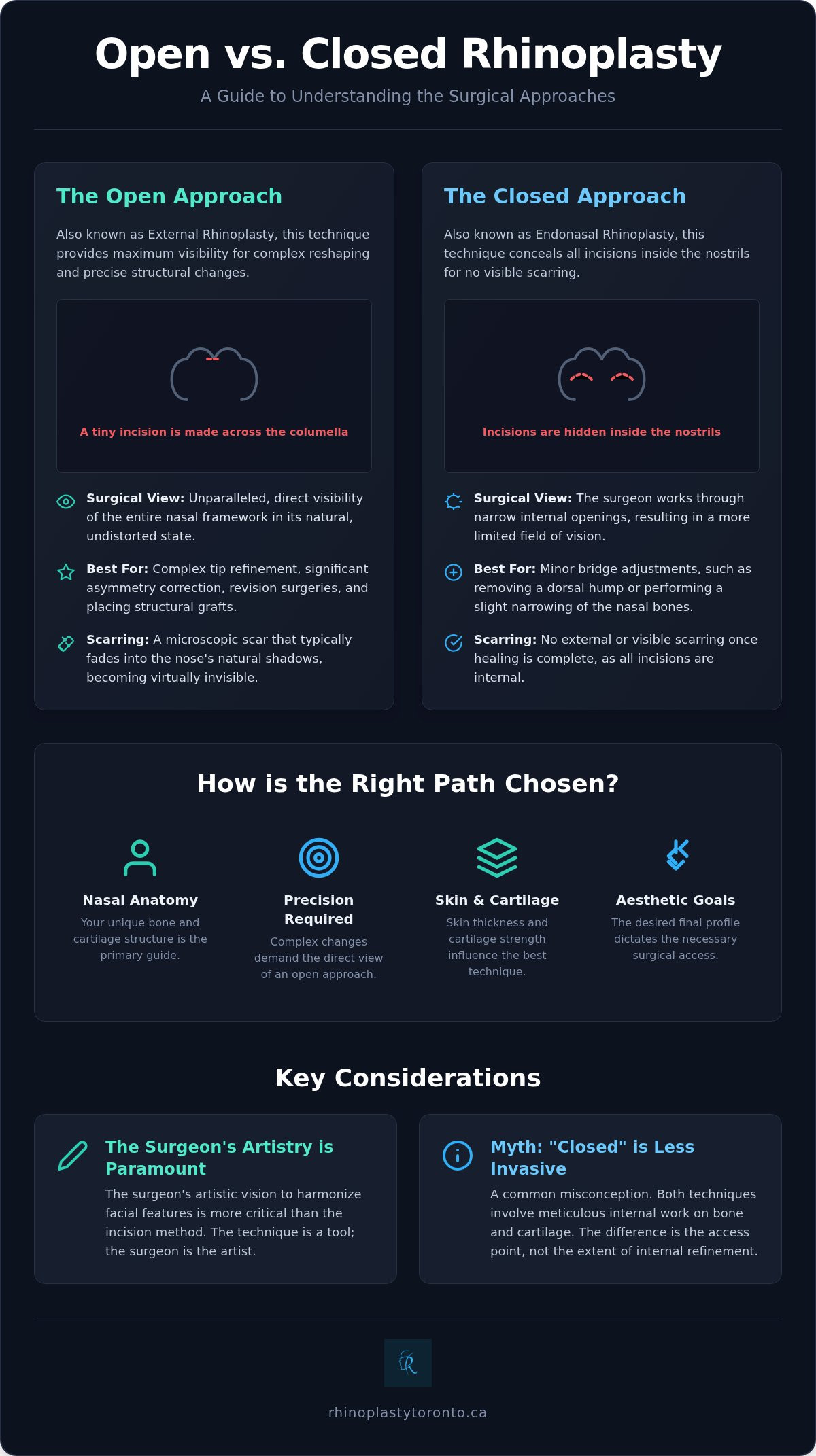
The closed, or endonasal, approach is defined by the placement of all incisions inside the nostrils. Because the surgeon works through these narrow internal openings, there’s no visible external scarring once the healing process is complete. This technique is often highly effective for patients requiring minor bridge adjustments, such as the removal of a dorsal hump or slight narrowing of the nasal bones. It offers a streamlined surgical path with potentially less initial tip swelling; however, it requires a high degree of technical skill to operate precisely within a limited field of vision.
The Open Approach: Maximum Visibility for Complex Reshaping
For more intricate structural changes, the open or external approach provides the surgeon with unparalleled visibility. This method involves a tiny incision across the columella, which is the narrow strip of tissue separating the nostrils. By gently lifting the nasal skin, the surgeon gains a comprehensive, unobstructed view of the nasal framework. This direct access is vital for complex tip refinement, correcting significant asymmetry, or the placement of structural grafts to improve breathing. While patients often worry about the columellar incision, the resulting scar is usually microscopic and fades into the nose’s natural shadows, becoming virtually invisible over time.
Choosing the right technique isn’t about which method is “better” in a general sense. Instead, it’s about which doorway allows the surgeon to achieve your specific goals with the highest level of precision. Both techniques aim for a balanced, functional result that enhances your profile while maintaining the unique character of your face.
Comparing the Techniques: Advantages and Clinical Considerations
Evaluating the merits of open vs closed rhinoplasty requires a focus on three primary clinical pillars: visibility, precision, and the specific goals of the surgery. While patients often gravitate toward the idea of a “scarless” procedure, the choice of technique is a strategic decision made to ensure the highest probability of a successful, natural-looking outcome. A common misconception is that the closed approach is inherently less invasive. In reality, the internal work performed on the bone and cartilage is just as extensive regardless of the incision location. The primary difference lies in how the surgeon accesses that framework.
Precision is particularly vital when addressing the nasal tip. The open approach allows the surgeon to visualize the anatomy in its natural, undistorted state. This direct view enables the placement of delicate sutures and grafts with millimetre-level accuracy, which is essential for achieving long-term symmetry. The surgeon’s familiarity and comfort with a specific method also dictate the final result. A highly experienced professional will select the technique that provides the most stable foundation for the patient’s unique anatomy.
Why Open Rhinoplasty is the Gold Standard for Revisions
Correcting a previous nose job presents unique challenges, primarily due to the presence of unpredictable scar tissue and altered structural support. Visibility becomes non-negotiable when a surgeon must identify why a previous procedure failed or address a structural collapse that hinders breathing. Dr. Rival utilizes his specialized expertise to navigate these complexities, often favouring the open technique for revision rhinoplasty in Toronto to ensure every internal adjustment is perfectly aligned with the patient’s functional and aesthetic needs.
When Closed Rhinoplasty is the Optimal Choice
The closed approach is often the ideal path for patients seeking straightforward refinements, such as reducing a bridge bump or slightly narrowing the nasal bones without altering the tip. This method relies heavily on the surgeon’s tactile feedback and immense experience, as much of the work is performed without a full view of the structures. Because the skin envelope is not entirely lifted, the operative duration is typically shorter, and some patients may experience a more rapid resolution of initial tip swelling.
Patients seeking clarity on their specific anatomical needs often benefit from a personalized consultation to determine which approach aligns with their long-term goals. Ultimately, the incision is simply a means to an end; the surgeon’s artistic eye and technical precision are what define the final profile.
The Decision Framework: How Dr. Rival Selects the Right Path
Selecting the appropriate surgical path requires a meticulous assessment of individual anatomy. Dr. Rival views the choice between open vs closed rhinoplasty as a strategic decision tailored to the patient’s structural needs. This selection process is never a “one-size-fits-all” determination; instead, it involves a deep analysis of skin thickness, cartilage resilience, and bone structure. For example, patients with thicker nasal skin may require the enhanced structural support that an open approach provides to ensure refinements remain visible over time. Conversely, a patient with robust cartilage and a simple dorsal hump might be an ideal candidate for the closed technique.
The consultation serves as a collaborative session where your aesthetic vision meets surgical expertise. It’s a chance to discuss your goals in a supportive environment.
Visualizing the Outcome with Advanced Digital Imaging
Dr. Rival incorporates advanced digital imaging into the planning phase to bridge the gap between surgical theory and your aesthetic goals. This technology acts as a clinical roadmap. By creating digital simulations of your nose and profile, the surgeon can demonstrate how specific changes to the bridge or tip may impact overall facial harmony. If you desire a significant change in tip projection, the imaging may reveal that an open approach is necessary to achieve that specific outcome with long-term stability. This transparency significantly reduces the anxiety often associated with cosmetic surgery by providing a clear visual expectation before the first incision is made.
Functional vs. Cosmetic Goals
Surgical planning must also prioritize the internal airway. Functional concerns, such as a deviated septum or collapsed nasal valves, often influence the choice of technique. Dr. Rival balances aesthetic refinement with airway preservation to ensure that the nose not only looks better but breathes better. Depending on the location of a blockage, a closed approach might suffice for internal straightening. However, more complex reconstructions of the nasal valves often necessitate the visibility of an open procedure to ensure functional success. This dual focus ensures that your results are as practical as they are beautiful.
Recovery and Results: What to Expect After Your Procedure
Regardless of whether you undergo open vs closed rhinoplasty, the recovery phase is a period that requires patience and strict adherence to clinical guidelines. Most patients in the Greater Toronto Area find they can return to professional and social obligations within 10 to 14 days. By this stage, the initial bruising and most visible swelling have typically resolved, allowing you to move through your daily routine with confidence. We emphasize that while you’ll see a significant change early on, the nose continues to refine itself for months following the surgery.
A common myth suggests that recovery from a closed procedure is significantly faster. While it’s true that open rhinoplasty may result in slightly more persistent swelling at the nasal tip due to the temporary disruption of lymphatic drainage, the long-term timeline remains the same. Both techniques require a full year for the final results to settle and for the delicate tissues to mature completely. Consistent attendance at post-operative follow-up appointments at our Toronto or Newmarket clinics is essential to monitor this progression and ensure the internal structures are healing as planned.
Managing the Columellar Scar in Open Rhinoplasty
Patients often feel anxious about the small incision used in the open approach. This incision is meticulously placed where the base of the nose meets the upper lip, a location that naturally hides any mark in the shadows of the nostrils. During the first few weeks, the line may appear faintly pink, but it typically fades into an imperceptible mark over several months. To ensure the best result, we recommend keeping the area moisturized and strictly avoiding sun exposure, which can cause the scar to darken permanently.
Toronto Recovery Tips: Protecting Your Investment
The climate in Ontario presents unique challenges for nasal healing. During our harsh winters, dry indoor heating can irritate the nasal passages and cause crusting. We suggest using a saline spray and a humidifier to maintain moisture levels. In the summer, sun safety in the GTA is paramount. UV rays can interfere with scar maturation and increase swelling. We advise patients to wear a wide-brimmed hat and apply medical-grade sunblock during the first year. Additionally, you should avoid strenuous gym sessions or local sports for at least six weeks to prevent accidental impact or blood pressure spikes that could compromise your results.
The Art of the Natural Result: Why Surgeon Choice Matters Most
While the technical debate regarding open vs closed rhinoplasty focuses on incision placement, the ultimate success of the procedure rests on the surgeon’s artistic vision. A surgeon’s “eye” for facial proportion is far more critical than the specific doorway used to access the nasal framework. The goal is never just to change a nose, but to harmonize it with the chin, cheeks, and brow. Dr. Rival adheres to a philosophy of subtle improvement, prioritizing a refined version of your natural self over radical, artificial changes that can look out of place. This commitment to naturalism ensures your results don’t scream “surgery” but rather whisper “balance.”
Choosing a specialist with the right credentials provides a foundation of safety and trust. Dr. Rival is a double board-certified facial plastic surgeon, a distinction that reflects his specialized focus on the intricate anatomy of the head and neck. With over 20 years of experience, he has mastered both the open and closed techniques, allowing him to select the most effective approach based on clinical necessity rather than technical limitation. This depth of experience means he can navigate the complexities of both primary and revision cases with a steady, practiced hand.
Patient-Centric Care in Toronto and Newmarket
The journey toward a new profile is a deeply personal experience that requires a supportive and professional environment. Our team provides a warm, patient-centric atmosphere where your concerns are heard and addressed with clinical authority. For the convenience of our patients across the GTA, we offer two locations for pre- and post-operative care. Whether you visit our Toronto or Newmarket office, you’ll receive a personalized surgical plan designed to meet your specific aesthetic and functional goals. This individualized attention ensures that every stage of your experience is managed with the highest level of care.
Next Steps: Booking Your Consultation
Preparing for your first visit is an essential part of the process. We encourage you to prepare a list of specific questions regarding surgical techniques and your desired outcomes. During your visit, advanced digital imaging will play a key role in your journey, allowing you to see a visual representation of your potential results before any decisions are finalized. This collaborative approach ensures you feel informed and confident in the path we choose together.
Empowering Your Path to a Refined Profile
Choosing between open vs closed rhinoplasty is a significant step toward achieving the facial harmony you’ve envisioned. We’ve explored how this decision rests on your unique nasal anatomy and the level of precision required for your specific goals. It’s clear that while the technique provides the access, it’s the surgeon’s artistic integrity and technical mastery that define the final result. By utilizing advanced digital imaging, we can better align your expectations with the possibilities of surgery before your journey begins.
As a double board-certified facial plastic surgeon and a specialist in revision rhinoplasty, Dr. Rival brings over 20 years of experience to every procedure. You deserve a guide who prioritizes both aesthetic beauty and long-term functional health. Whether you require subtle refinement or complex structural correction, our team is dedicated to providing a safe, supportive, and sophisticated experience. You don’t have to navigate these decisions alone. Book a Personal Consultation with Dr. Rival in Toronto or Newmarket today to explore the possibilities for your transformation. We look forward to helping you achieve a result that feels as natural as it looks.
Frequently Asked Questions
Is closed rhinoplasty less painful than open rhinoplasty?
Pain levels are generally comparable between both techniques because the internal modifications to the bone and cartilage are similar. Most patients describe the post-operative sensation as a feeling of congestion or heavy pressure rather than sharp pain. Any discomfort is typically well-managed with prescribed medication during the first few days of recovery. Since the procedure is performed under general anesthesia, you won’t feel anything during the surgery regardless of the incision method used.
How long does the scar from an open rhinoplasty take to fade?
The columellar scar from an open procedure typically takes six to twelve months to mature and become virtually invisible. While the incision line may appear slightly pink for the first few weeks, it gradually fades to match your natural skin tone. Following post-operative care instructions, such as applying medical-grade sunblock and keeping the area moisturized, is essential for ensuring the scar blends seamlessly into the natural shadows of the nose.
Can I choose which technique the surgeon uses for my nose job?
While your preferences are a vital part of the consultation, the final choice between open vs closed rhinoplasty is a clinical decision based on your unique nasal anatomy. Dr. Rival evaluates your skin thickness, cartilage strength, and the complexity of the required changes to determine the most effective path. The goal is to select the technique that offers the highest probability of achieving your desired aesthetic and functional outcome with long-term stability.
Does open rhinoplasty cause more swelling than the closed approach?
Open rhinoplasty often results in slightly more persistent swelling at the nasal tip during the initial healing phase. This occurs because the external incision temporarily disrupts the lymphatic drainage in that specific area. However, the majority of visible swelling for both procedures subsides within the first two weeks. It is important to remember that the final refinement of the nasal tip takes a full year to realize for both surgical approaches.
Is one technique safer than the other for breathing issues?
Neither technique is inherently safer, but the open approach is often preferred for complex breathing corrections because it provides an unobstructed view of the internal valves. If your procedure involves significant structural grafting to prevent airway collapse, the visibility afforded by the open method allows for more precise placement. Dr. Rival’s background in Otolaryngology ensures that maintaining and improving your breathing is a primary focus regardless of the chosen incision.
Will my insurance or OHIP cover any part of the rhinoplasty?
OHIP does not cover rhinoplasty performed for cosmetic reasons. However, if you require a septoplasty to correct a deviated septum and improve breathing, that specific portion of the surgery may be covered by provincial insurance. Any aesthetic refinements performed during the same session are considered elective and must be paid for privately. Patients should verify their specific coverage details with their insurance provider and our office staff during the planning stage.
How soon after surgery can I wear glasses or sunglasses?
You should avoid resting glasses or sunglasses directly on the bridge of your nose for at least four to six weeks following surgery. The nasal bones are in a delicate state while healing, and the weight of frames can cause permanent indentations or shifting. If you must wear glasses, you can tape them to your forehead or use specialized guards that distribute the weight to your cheeks to protect your surgical investment.
What happens if I need a revision after a closed rhinoplasty?
If a revision is necessary following a primary closed procedure, Dr. Rival typically recommends an open approach to address the underlying issues. Revision surgery involves navigating existing scar tissue and potentially weakened cartilage, which requires the maximum visibility that the open technique provides. This allows the surgeon to identify the exact cause of the initial dissatisfaction and perform the precise structural work needed to restore facial harmony and function.