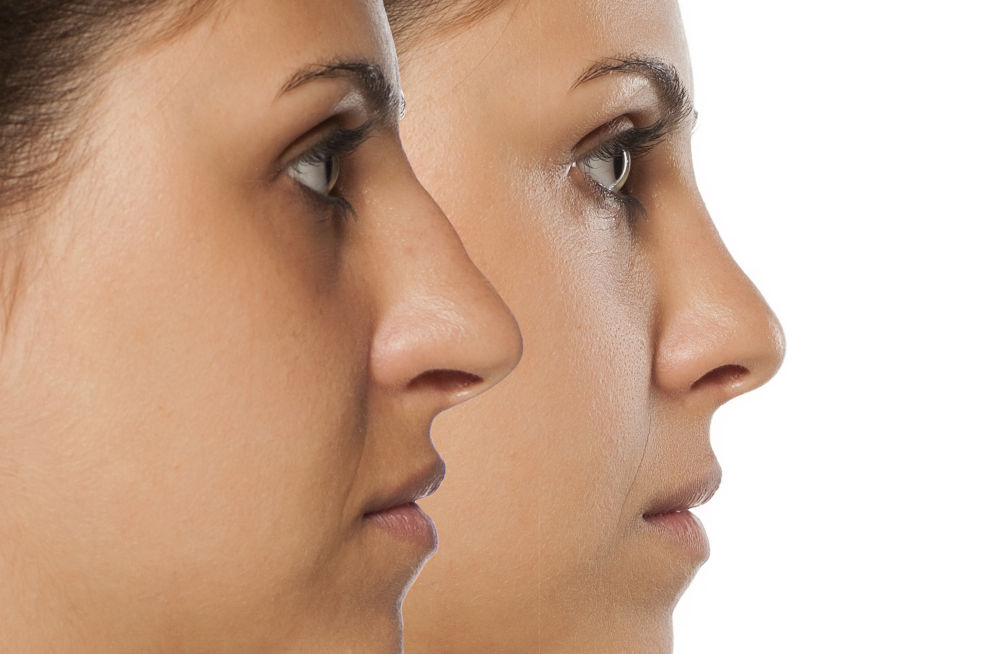
Rhinoplasty is not limited to people in their teens or 20s. Many patients consider nose surgery in their 30s, 40s, or 50s, often after years of thinking about it. The main difference is not whether surgery is “allowed” at a certain age. It is how the nose, skin, face, and healing pattern need to be assessed.
In the 30s, many patients still have strong skin tone and are looking for refinement rather than major change. In the 40s, planning often becomes more focused on facial balance, because early ageing can alter how the nose sits within the face. In the 50s, rhinoplasty can still be very appropriate for healthy patients, but the plan usually needs to be more conservative, structural, and realistic about swelling and skin behaviour.
Age matters, but it does not decide everything. Skin thickness, nasal support, breathing, previous injury or surgery, general health, and expectations usually matter more. A consultation with Dr. Rival is the proper way to understand what is realistic for your own nose, skin, and goals.
Table of Contents
- Is There a Best Age for Rhinoplasty?
- Rhinoplasty in Your 30s
- Rhinoplasty in Your 40s
- Rhinoplasty in Your 50s
- How Skin Changes Affect Rhinoplasty Results
- Healing Expectations by Age
- Cosmetic vs. Functional Rhinoplasty Later in Life
- Common Patient Scenarios
- What Makes Someone a Good Candidate?
- Quick Comparison
- FAQ
Key Takeaways
- Rhinoplasty can be suitable in the 30s, 40s, and 50s when health, anatomy, and expectations are appropriate.
- The 30s are often a strong decade for refinement because skin tone is usually still good.
- In the 40s, facial balance matters more because cheeks, jawline, and soft tissue support may start to change.
- In the 50s, surgery often works best when the plan protects structure and avoids an over-operated look.
- Healing speed is individual. Age has an effect, but so do skin thickness, surgical complexity, smoking, and general health.
- No patient should be told they are automatically “too old” for rhinoplasty based on age alone.
- The safest answer comes from a proper assessment, not from comparing decades online.
Is There a Best Age for Rhinoplasty?
There is no single best age for rhinoplasty. That answer may sound less satisfying than a neat number, but it is more honest.
Some patients are ready in early adulthood, once the face has finished growing. Others wait much longer. They may have wanted surgery for years but were busy with work, family, finances, or simply did not feel ready. Some people only start thinking seriously about rhinoplasty after seeing themselves in photos, video calls, or side-profile images. Others come in because breathing has become more frustrating over time.
The best age for rhinoplasty depends on several things: the shape of the nose, skin thickness, skin elasticity, breathing function, previous trauma, previous surgery, general health, and how realistic the patient’s goals are. Emotional readiness matters too. A patient who understands the limits of surgery is usually in a better position than someone chasing a very specific celebrity nose or a filtered image.
Younger does not automatically mean better. Older does not automatically mean difficult. Each age group brings advantages and limitations.
Why age matters, but does not decide everything
Age affects tissue behaviour. Skin may not redrape the same way at 50 as it did at 25. Swelling may take longer to settle. Nasal support may need more attention. But a patient’s actual anatomy is more important than the number on their chart.
This is why Dr. Rival looks at the nose in context: bridge, tip, nostrils, skin, airway, cartilage strength, facial proportions, and the patient’s reasons for wanting surgery. Two people of the same age can need very different surgical plans.
Rhinoplasty in Your 30s: Refinement, Balance, and Strong Healing Potential
Rhinoplasty in your 30s is often a good time for thoughtful refinement. By this stage, facial growth is complete, and most patients have had enough time to understand what has bothered them consistently.
The concern is not always dramatic. A patient may dislike a bump on the bridge. Another may feel the tip is too round, too low, or not defined enough. Someone else may have asymmetry from an old injury. Many patients also have breathing concerns, often from a deviated septum or previous nasal trauma.
Skin in the 30s often still has good elasticity. That can help the skin settle more predictably over the reshaped bone and cartilage. It does not mean the final result appears quickly. Rhinoplasty still heals slowly, and the tip almost always takes longer than patients expect. But many patients in this age group see steady definition develop over the first year.
Another advantage of the 30s is clarity. Patients are often past the stage of wanting a trendy or overly small nose. They usually want the nose to fit the face better. That can make planning more sensible and more natural.
Common goals in this decade include:
- smoothing a dorsal hump;
- refining a rounded or drooping tip;
- improving bridge shape;
- narrowing wide nostrils;
- correcting asymmetry;
- improving breathing when structural issues are present.
Skin and swelling expectations in your 30s
Swelling is still part of the process. The upper bridge often settles earlier, while the tip can remain full or firm for months. Patients with thicker skin may need more patience. Patients with thinner skin may see definition sooner, although small irregularities can be easier to notice.
A good consultation should explain this before surgery, not after the patient becomes worried.
Why subtle changes often work well
Many patients seeking rhinoplasty in your 30s do not want to look like a different person. They want the nose to stop dominating the face. A modest change to the bridge, tip, projection, or nostril shape can sometimes do more than an aggressive reduction. The aim is balance, not a nose that looks surgically “designed.”
Rhinoplasty in Your 40s: Skin Elasticity, Facial Balance, and Long-Term Planning
Rhinoplasty in your 40s is still common, but the planning tends to become more layered.
This is the decade when some patients begin to notice early changes in the face. Cheeks may lose a little volume. The jawline may soften. Skin may not feel as firm as it once did. Against these changes, the nose can seem stronger or more prominent, even if its actual structure has not changed much.
That is why rhinoplasty in your 40s should not be planned as if the nose exists on its own. The nose has to make sense with the cheeks, chin, jawline, eyes, and overall facial proportions. Reducing a bridge too much can look harsh. Lifting a tip too far can look unnatural. Making the nose too narrow can make the rest of the face appear heavier by comparison.
For many patients, the right goal is not “make me look younger.” It is more specific than that. Soften the profile. Refine the tip. Improve the front view. Correct an old injury. Make the nose look less distracting. Improve breathing if airflow is part of the problem.
That type of goal usually leads to a better conversation.
Healing expectations after 40
Rhinoplasty recovery after 40 is not automatically harder. A healthy patient in their 40s can heal very well. Still, some patients notice that bruising, swelling, or firmness hangs around longer than expected.
This is not only about age. Thick skin, revision surgery, smoking, medications, medical conditions, and the amount of structural work involved all matter. A primary rhinoplasty with good skin quality may settle more smoothly than a complex revision in a younger patient.
Why facial balance matters more
In the 40s, a natural result usually comes from restraint. The nose should be refined in a way that suits the whole face. A smaller nose is not always a better nose. A more supported, balanced, and proportionate nose often looks more elegant over time.
Dr. Rival’s planning considers how the result will sit within the patient’s current face, not an imagined younger version of it.
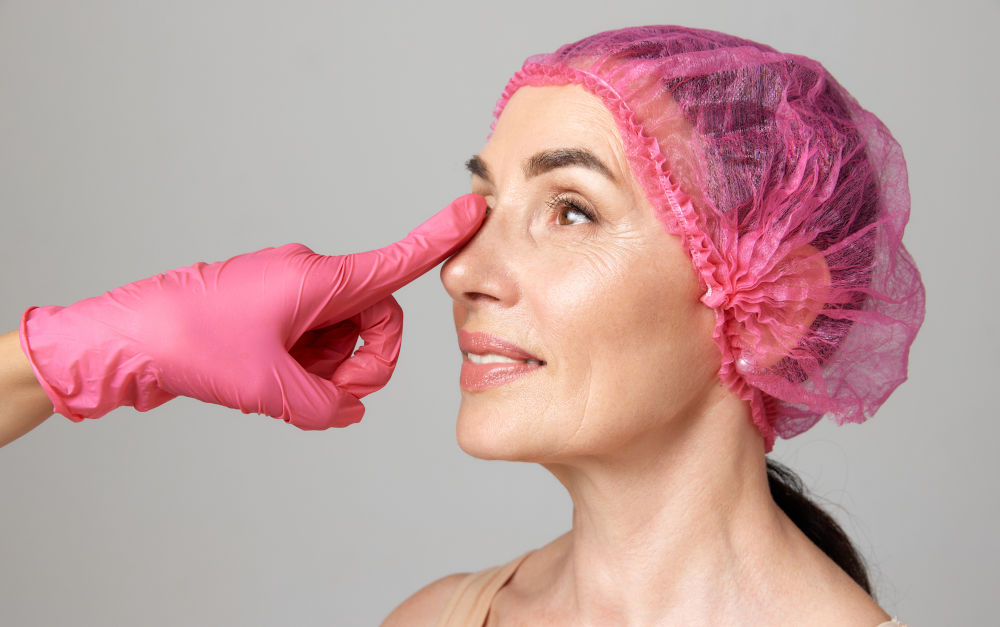
Rhinoplasty in Your 50s: Structure, Skin Quality, and Realistic Refinement
A patient in their 50s is not automatically too old for rhinoplasty. That idea is outdated and not very useful. The better question is whether the patient is healthy, whether the nasal tissues can support the desired change, and whether the goals are realistic.
People seek rhinoplasty in their 50s for many reasons. Some have wanted it for decades. Some have had an injury. Some notice that the tip has started to droop. Others are more concerned about breathing than appearance. A long-standing concern can become more noticeable with age, especially when other facial features begin to soften.
The surgical plan in the 50s often needs to be more conservative. Skin may have less elasticity. Swelling may take longer to settle. The nasal tip may need stronger support. Sun exposure and skin texture can also influence how much refinement is visible after surgery.
This does not mean the result has to be minimal. It means the result should be planned with respect for the tissue. Removing too much cartilage or trying to force a sharply defined tip through less elastic skin can create problems. A balanced improvement is usually more attractive than an overdone change.
Why conservative planning may be recommended
Conservative does not mean “barely noticeable.” It means careful.
In the 50s, the surgeon may prioritise support, airway stability, smoother lines, and a natural profile. The nose should not look disconnected from the rest of the face. It should still belong to the patient.
Overly aggressive reshaping can increase the risk of an unnatural look, weaker support, or healing concerns. This is why structural planning becomes so important.
Can rhinoplasty still look natural after 50?
Yes. Rhinoplasty can still look natural after 50 when the plan respects skin quality, anatomy, facial ageing, and healing limits. In many cases, the most successful result is not the smallest nose. It is the nose that looks calmer, better supported, and more in proportion.
How Skin Changes Affect Rhinoplasty Results
Skin is one of the most important parts of rhinoplasty planning, and patients often underestimate it.
The surgeon changes the bone and cartilage underneath. The skin then has to settle over that new shape. It does not shrink instantly. It does not behave the same way in every person. It does not always reveal every detail the surgeon creates underneath.
Thicker skin can hide definition, especially in the tip. A patient with thick skin may not get a sharply sculpted tip, even with good surgery. Thin skin is different. It may show refinement more clearly, but it can also reveal small irregularities that thicker skin would hide.
Reduced elasticity can make redraping slower. Sun damage, oily skin, previous inflammation, scarring, rosacea, or earlier procedures may also affect swelling and texture.
None of this means the patient is unsuitable. It means the surgical plan has to match the skin.
Thick skin vs. thin skin
Thick skin and thin skin both need skill. Thick skin often needs strong structure underneath so the nose does not look heavy or undefined. Thin skin needs very precise shaping because small edges or asymmetries can show more easily.
The problem is not the skin itself. The problem is pretending skin type does not matter.
Why skin does not shrink instantly after surgery
Rhinoplasty is not a skin-tightening procedure. The framework changes first. The skin follows gradually. This is one reason the early result can be misleading. A nose may look swollen, rounded, or too broad in the first weeks even when the underlying shape is settling well.
Healing Expectations by Age: What May Change?
Healing is never completely predictable, but age can influence the pattern.
In your 30s, healing may feel fairly steady for many patients. Swelling still lasts, especially in the tip, but skin tone is often supportive.
In your 40s, swelling and bruising may take a little longer for some patients. Tissue firmness can also last longer, particularly when the surgery involves tip work, grafting, or correction of older trauma.
In your 50s, patience becomes even more important. Rhinoplasty recovery after 50 may involve a longer period of swelling and gradual refinement. The final result should not be judged in the first few months.
Still, recovery is not just about age. A healthy 52-year-old non-smoker may heal better than a 32-year-old smoker with thick skin and a complex revision. Surgical technique, skin quality, medical history, lifestyle, and aftercare all matter.
Why final results still take time at any age
Even younger patients do not see the final result immediately. The nose changes month by month. The bridge often improves first. The tip is slower. In thicker skin or more complex cases, refinement can continue for a long time.
This is why honest pre-surgical counselling matters. Patients need to know what is normal before they start judging the result too early.
Cosmetic vs. Functional Rhinoplasty Later in Life
Not every patient considering rhinoplasty later in life is focused only on appearance.
Some have lived with blocked breathing for years. Some have a deviated septum. Others have nasal valve weakness, trauma from an old injury, or age-related loss of nasal support. In these cases, the conversation may involve function as much as appearance.
When cosmetic and breathing concerns overlap, septorhinoplasty may be discussed. This means the surgeon considers both the external shape of the nose and the internal structures that affect airflow.
Why breathing concerns should be evaluated carefully
A blocked nose can have several causes. It may be related to the septum, nasal valves, turbinates, allergies, inflammation, or more than one issue at the same time. It should not be guessed from symptoms alone.
A proper examination helps determine whether surgery may help, and what type of correction would be appropriate.
Common Patient Scenarios
“I’ve wanted rhinoplasty since my 20s, but I’m only ready now.”
This is very common. Many people wait until life is more settled. That does not mean the opportunity has passed. It simply means the plan should be based on the face you have now, not the face you had at 23.
“I’m worried my skin will not heal well after 40.”
That worry is understandable, but age alone does not tell the whole story. Skin thickness, elasticity, sun damage, health, smoking status, and the amount of surgery all affect healing. Some patients in their 40s heal very smoothly.
“I’m in my 50s and do not want to look different.”
That is often a good starting point. Many patients in their 50s want refinement, not transformation. A natural result should improve balance without making the nose look artificial or out of place.
“My nose looks more droopy as I age.”
The nasal tip can lose support over time. The nose may appear longer, heavier, or less defined. A surgeon can assess whether tip support, refinement, or functional correction may help.
What Makes Someone a Good Candidate?
A good rhinoplasty candidate is not defined by age alone. More important factors include:
- good overall health;
- stable medical conditions;
- realistic expectations;
- clear cosmetic or breathing concerns;
- healthy healing capacity;
- non-smoking status, or willingness to follow medical advice about stopping;
- willingness to follow recovery instructions;
- understanding that the final result takes time.
Previous surgery, older age, thick skin, or breathing problems do not automatically rule someone out. They simply make the assessment more detailed.
Why consultation is especially important after 40
After 40, the surgeon needs to look carefully at skin quality, cartilage strength, nasal support, breathing, facial proportions, and healing risk. This is not meant to discourage patients. It is what allows the plan to be safer, more realistic, and more natural.
Quick Comparison: Rhinoplasty in Your 30s, 40s, and 50s
| Age group | Common goals | Skin and healing considerations | Planning focus |
|---|---|---|---|
| 30s | Bridge smoothing, tip refinement, nostril narrowing, profile balance, breathing correction | Skin often still has good elasticity. Swelling may settle steadily, though the tip still takes time. | Natural refinement and facial balance |
| 40s | Softer profile, correction of long-standing concerns, early ageing balance, functional improvement | Some patients notice slower swelling or early changes in skin tone. | Facial harmony, proportion, and support |
| 50s | Conservative refinement, drooping tip correction, breathing improvement, more balanced profile | Skin may be less elastic. Swelling may take longer. Support matters more. | Structure, stability, and realistic improvement |
Final Thoughts
Rhinoplasty can be appropriate in your 30s, 40s, or 50s. The right plan changes with the patient. Skin quality, nasal structure, breathing, facial ageing, health, and expectations all need to be considered together.
For patients considering rhinoplasty in Toronto, a consultation with Dr. Rival can help clarify what is realistic for your age, skin type, anatomy, and goals. The aim is not to promise a perfect nose. The aim is to plan a result that looks natural, functions well, and fits the face.
FAQ
Is 30 a good age for rhinoplasty?
Yes. Many patients in their 30s are good candidates for rhinoplasty. Facial growth is complete, goals are often stable, and skin usually still has good elasticity. Suitability still depends on nasal anatomy, health, breathing, and expectations.
Can I get rhinoplasty in my 40s?
Yes. Rhinoplasty in your 40s can be appropriate for healthy patients. The plan may need to consider skin elasticity, early facial ageing, nasal support, and long-term balance.
Is 50 too old for rhinoplasty?
No. Being 50 does not automatically make someone too old for rhinoplasty. Healthy patients in their 50s may still be suitable candidates. The plan often needs to be conservative, structural, and realistic.
Does rhinoplasty healing take longer as you age?
It can. Some patients notice slower swelling resolution, bruising, or firmness with age. Recovery also depends on skin thickness, surgical technique, smoking status, general health, and whether the procedure is primary or revision.
How does skin elasticity affect rhinoplasty results?
Skin elasticity affects how well the skin settles over the reshaped nasal framework. Reduced elasticity may lead to slower redraping and softer definition, especially in the nasal tip.
Is swelling worse after rhinoplasty in your 40s or 50s?
Not always. Some patients heal very well in their 40s and 50s. However, swelling may take longer to settle for some people, particularly when skin elasticity has changed or the surgery is more complex.
Can rhinoplasty still look natural later in life?
Yes. Rhinoplasty can look natural later in life when the plan respects the patient’s skin, anatomy, facial ageing, and realistic goals.
Does thick skin make rhinoplasty harder after 40?
Thick skin can make fine tip definition less visible, but it does not automatically prevent a good result. It usually requires strong support and realistic expectations.
Can rhinoplasty improve breathing in older patients?
Yes, when breathing problems are caused by structural issues such as septal deviation or nasal valve weakness. A proper assessment is needed before deciding whether surgery may help.
How do I know if I am a good candidate for rhinoplasty at my age?
The best way to know is through an in-person consultation. The surgeon will assess your nasal anatomy, skin quality, breathing function, facial balance, health history, and expectations before recommending a plan.