Key Takeaways
- Ultrasonic rhinoplasty uses piezoelectric technology to reshape the nasal bone with greater precision compared to traditional methods.
- It is considered less invasive due to reduced trauma to surrounding tissues, resulting in less bruising, swelling, and faster recovery.
- Ultrasonic vs. laser rhinoplasty: both aim for precision, but ultrasonic techniques are safer for bone work, while laser tools are primarily focused on soft tissue.
- Ideal candidates are patients in good health with realistic expectations and concerns related to the cosmetic or functional aspects of their nose.
- In Canada, the average cost of ultrasonic rhinoplasty ranges.
- Recovery is generally quicker and safer compared to traditional approaches, with high patient satisfaction.
- Ultrasonic rhinoplasty can correct both functional and cosmetic issues, making it a versatile procedure.
- Alternatives exist, such as fillers or laser treatments, but they are limited compared to ultrasonic techniques.
What is ultrasonic rhinoplasty, and how does it work?
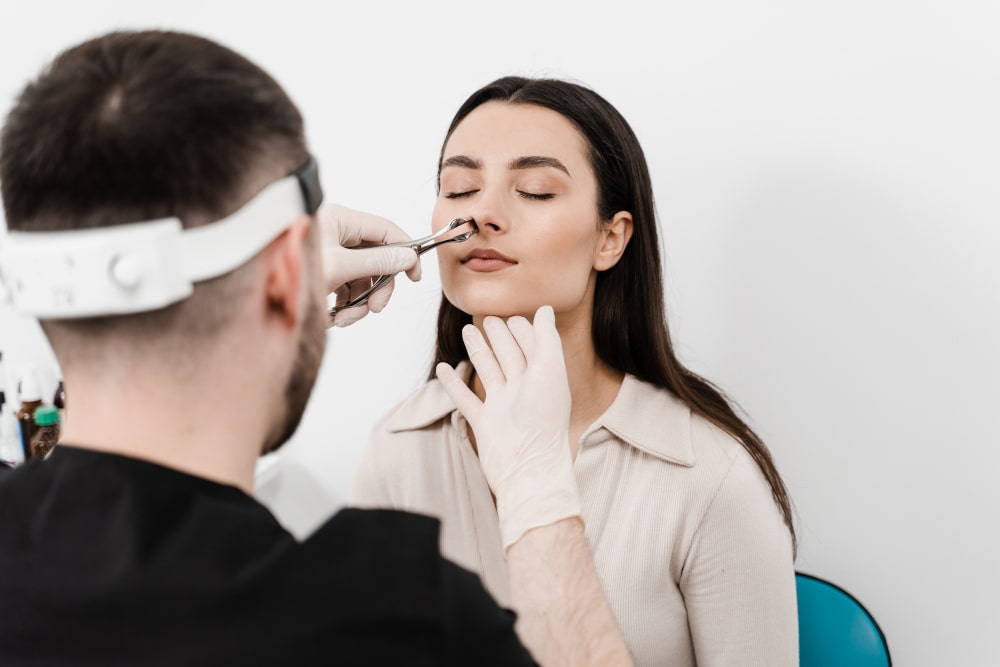
Imagine a sculptor shaping marble with delicate vibrations, rather than heavy chisels. Ultrasonic rhinoplasty applies the same principle to the nasal bone, offering plastic surgeons a tool that cuts with accuracy while protecting delicate tissues. The technique relies on piezoelectric technology, a method that converts electrical energy into ultrasonic vibrations. These vibrations drive fine surgical tips that can cut or smooth bone without damaging surrounding cartilage, soft tissue, or blood vessels.
Piezoelectric technology explained
Piezoelectric crystals generate ultrasonic waves when subjected to an electrical current. In rhinoplasty, this energy is transferred to a handheld device with fine tips designed to cut bone selectively. The tips vibrate at a frequency of 25–30 kHz, high enough to target mineralized structures but harmless to softer tissues. This “selectivity” makes ultrasonic instruments highly valuable for reshaping nasal structures with control.
Step-by-step surgical process
- Anesthesia – The procedure begins under general anesthesia.
- Access – Small incisions are made inside the nostrils or at the base of the columella (open approach).
- Bone reshaping – Surgeons use ultrasonic tips to file, cut, or smooth bone with micrometre precision.
- Cartilage adjustment – If necessary, the septal or tip cartilage is modified to achieve balance.
- Refinement – Tools are used to polish bone edges, avoiding irregularities.
- Closure – Sutures are placed, and the nose is supported with an external splint.
Expert insight
According to Dr. Richard Rival, a board-certified facial plastic surgeon in Toronto, “Ultrasonic rhinoplasty allows us to reshape bone with a level of finesse that was not possible with traditional tools. Patients benefit from a smoother outcome, with less trauma and faster recovery.”
Why is ultrasonic rhinoplasty considered less invasive than traditional methods?
Traditional rhinoplasty often relies on rasps and osteotomes—tools that fracture bone with force. While effective, they can cause collateral trauma, leading to more swelling, bruising, and a longer recovery. Ultrasonic rhinoplasty changes this dynamic by offering controlled micro-vibrations instead of brute force.
Reduced tissue trauma
The selective cutting of bone spares nearby tissues, nerves, and blood vessels. What’s the result? Less bleeding during surgery, less bruising afterwards, and a faster return to daily activities.
Less bruising and swelling
Studies in the Aesthetic Surgery Journal highlight that ultrasonic techniques reduce periorbital bruising compared to traditional osteotomies. Patients often report looking “presentable” within a week rather than two or three.
Shorter downtime
On average, patients undergoing ultrasonic rhinoplasty resume light work within 7–10 days. In contrast, traditional methods may require 2–3 weeks for visible bruising and swelling to subside.
Comparison table
| Aspect | Traditional Rhinoplasty | Ultrasonic Rhinoplasty |
| Bone modification | Hammers/rasps | Ultrasonic vibrations |
| Tissue trauma | Higher | Minimal |
| Bruising | Moderate to severe | Mild |
| Swelling | Prolonged | Reduced |
| Recovery time | 2–3 weeks | 7–10 days |
How does ultrasonic rhinoplasty differ from laser rhinoplasty?
The word “laser” often implies cutting-edge technology, but in nasal surgery, lasers play a limited role. Ultrasonic rhinoplasty and laser rhinoplasty operate on fundamentally different principles, and each has specific strengths.
Ultrasonic vs laser – core difference
- Ultrasonic tools are designed for bone reshaping. They selectively act on mineralized tissue while preserving softer structures.
- Lasers (such as CO₂ or Er: YAG) are optimized for soft tissue cutting. They vaporize or coagulate tissues with light energy, not mechanical vibrations.
Benefits and limitations
- Ultrasonic rhinoplasty: Ideal for precise bone reshaping, smoothing irregularities, and reducing trauma.
- Laser rhinoplasty: Useful for trimming soft tissues, refining internal structures, or reducing minor obstructions. However, it does not allow controlled reshaping of bone.
Safety aspects
While both methods are safe in experienced hands, ultrasonic tools are generally preferred for structural rhinoplasty because they avoid the thermal damage that lasers can cause. Lasers may also increase the risk of scarring if not used carefully.
Comparison table
| Aspect | Ultrasonic Rhinoplasty | Laser Rhinoplasty |
|---|---|---|
| Main target | Bone | Soft tissue |
| Mechanism | Ultrasonic vibrations | Light energy |
| Precision | High, bone-selective | High for soft tissue |
| Risk of thermal damage | None | Possible |
| Best use | Structural reshaping | Minor tissue refinement |

Who is an ideal candidate for ultrasonic rhinoplasty?
Not every patient is suited for ultrasonic rhinoplasty. Eligibility depends on health, anatomy, and expectations. Surgeons assess whether ultrasonic tools can safely achieve the patient’s goals without compromising function.
Eligibility criteria
- Age: Generally 18+ (after nasal growth is complete)
- Health: Non-smoker, no bleeding disorders, good general health
- Nasal structure: Bone irregularities, dorsal humps, or crookedness are correctable with ultrasonic tools
- Expectations: Realistic goals for cosmetic improvement or breathing enhancement
Medical considerations
Patients with uncontrolled hypertension, clotting problems, or unrealistic aesthetic demands may not be ideal candidates. Previous nasal surgeries are not contraindications, but revision rhinoplasty cases require careful planning.
Cosmetic goals
- Refining a dorsal hump
- Straightening crooked nasal bones
- Achieving facial balance
- Smoothing irregularities from previous procedures
Example of good candidates
Someone with a prominent nasal hump and an otherwise healthy medical profile is a strong candidate. Patients seeking subtle refinements, rather than radical changes, are particularly well-suited.
Specification table
| Candidate Factor | Ideal Candidate | Non-Ideal Candidate |
|---|---|---|
| Age | 18+ with full nasal growth | Under 18 |
| Health | Non-smoker, good general health | Bleeding disorders, uncontrolled medical issues |
| Cosmetic goal | Natural refinement, smoothing irregularities | Unrealistic or extreme changes |
| Revision surgery | Possible with proper planning | High risk in poor health |
What are the benefits of ultrasonic rhinoplasty?
Ultrasonic rhinoplasty provides multiple advantages over traditional surgery, particularly for patients in Toronto who have access to experienced facial plastic surgeons like Dr. Richard Rival.
Local advantages
- Access to highly trained surgeons in major Canadian cities
- Postoperative care and follow-up tailored to recovery needs
- Increasing popularity in Toronto, giving patients confidence in surgeon’s experience
Clinical benefits
- Reduced bruising and swelling
- Shorter downtime
- Enhanced precision for reshaping bone
- Lower revision rates due to controlled bone cutting
Research support
A study published in Plastic and Reconstructive Surgery confirmed that ultrasonic osteotomy produces less swelling and ecchymosis than conventional tools.
Patient experiences
On cosmetic surgery forums, Toronto patients frequently describe ultrasonic rhinoplasty recovery as “surprisingly smooth” compared to expectations. Many notes indicate a return to work in 7–10 days, with minimal visible bruising.
How much does ultrasonic rhinoplasty cost in Canada?
Pricing varies widely, but several consistent factors shape the cost of ultrasonic rhinoplasty in Canada.
Average cost range
In Toronto and other Canadian cities, the typical price falls between $9,000 and $14,000 CAD.
Influencing factors
- Surgeon’s expertise – board-certified, specialized in facial plastic surgery
- Complexity of the case – primary vs revision rhinoplasty
- Facility fees – surgical centre vs hospital setting
- Geographic location – urban centres may be costlier.
Financing options
Most clinics in Toronto, including Rhinoplasty Toronto, offer financing plans to spread out payments. Patients may access third-party financing for affordability.
Insurance notes
Cosmetic rhinoplasty is not covered by insurance. However, functional corrections — such as septoplasty for breathing problems — may be partially reimbursed.
Specification table
| Factor | Details |
|---|---|
| Average cost | $9,000 – $14,000 CAD |
| Covered by insurance | Only functional corrections |
| Influencing factors | Surgeon expertise, complexity, facility fees, and location |
| Financing options | Monthly payment plans available |
Is ultrasonic rhinoplasty safe, and what are the risks?
Safety is a central question for any surgical procedure. Ultrasonic rhinoplasty has demonstrated a favourable safety profile in clinical studies, with complication rates lower or comparable to traditional rhinoplasty.
Common risks
- Temporary swelling and bruising
- Mild numbness around the nose
- Nasal congestion in the early healing phase
- Minor irregularities in bone contour
Serious but rare risks
- Infection
- Prolonged bleeding
- Asymmetry requiring revision
- Anaesthesia-related complications
Comparative safety
A study published in the Journal of Craniofacial Surgery noted that ultrasonic osteotomy resulted in significantly less tissue trauma and a shorter recovery time compared to traditional bone-cutting methods.
What is the recovery process after ultrasonic rhinoplasty?
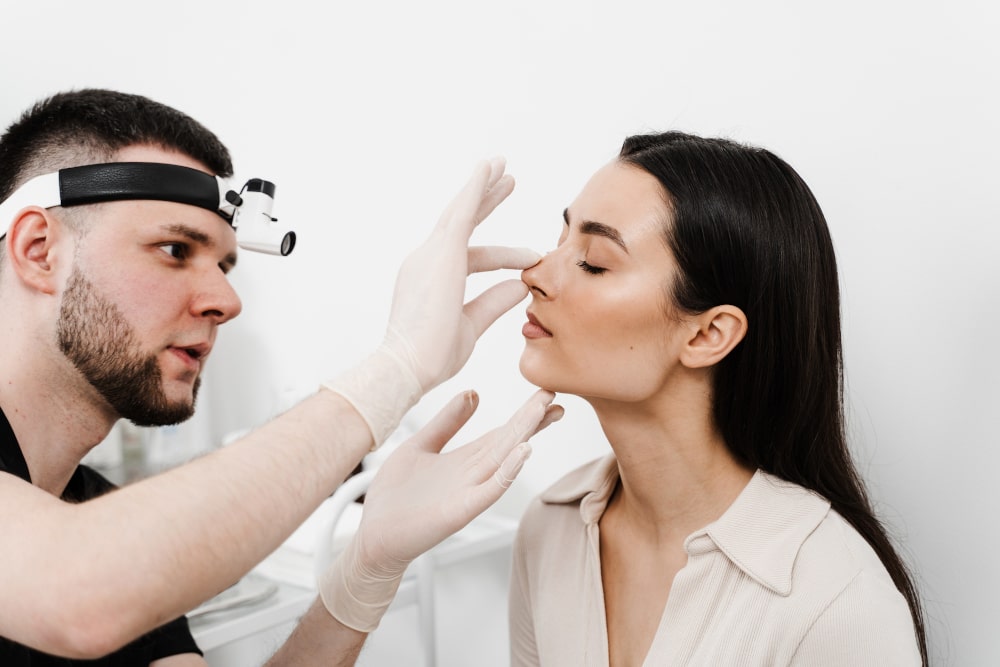
Recovery from ultrasonic rhinoplasty is often smoother and faster than recovery from traditional methods, but it still follows a structured timeline.
Recovery timeline
- First 1–3 days – Swelling peaks, nasal splint remains in place, discomfort managed with medication.
- Day 4–7 – Bruising around the eyes begins to fade; most patients feel ready for light activity.
- 1 week – Splint removal; nose looks less swollen, though refinement continues.
- 2–4 weeks – Swelling steadily decreases, breathing improves, and normal daily activities can resume.
- 3–6 months – Nasal contours refine, subtle swelling resolves.
- 1 year – Final results are visible, and scar tissue has fully matured.
Activity restrictions
- Avoid strenuous exercise for 3–4 weeks.
- No glasses resting on the nose for 4–6 weeks
- Protect the nose from accidental trauma during healing.
How do the results of ultrasonic rhinoplasty compare with traditional nose surgery?
The long-term outcomes of ultrasonic rhinoplasty are generally comparable to or superior to those of traditional methods, with a strong emphasis on achieving natural-looking results.
Longevity
Both ultrasonic and traditional rhinoplasty provide permanent results. However, ultrasonic precision may reduce the need for revisions.
Natural appearance
Ultrasonic tools allow surgeons to smooth bone edges, reducing the risk of irregularities and sharp transitions. This often results in a softer, more natural nasal contour.
Revisions
Revision rates are generally lower with ultrasonic techniques, as precise bone reshaping decreases postoperative irregularities.
Comparison table
| Factor | Ultrasonic Rhinoplasty | Traditional Rhinoplasty |
|---|---|---|
| Longevity | Permanent | Permanent |
| Natural appearance | High, smoother contours | Variable, risk of irregularities |
| Revision rates | Lower | Higher |
| Recovery | Faster | Slower |
Can ultrasonic rhinoplasty correct both functional and cosmetic issues?
Yes, ultrasonic rhinoplasty is designed to address both functional and aesthetic nasal concerns, often within the same procedure.
Breathing improvements
Ultrasonic tools can be combined with septoplasty to correct deviated septa, improve airflow, and resolve chronic nasal obstruction. Patients with both cosmetic and breathing concerns often benefit most.
Cosmetic reshaping
At the same time, surgeons refine nasal contours — reducing humps, straightening crookedness, and achieving better facial harmony.

Are there alternatives to ultrasonic rhinoplasty for less invasive results?
Not all patients need or want surgery. Several non-surgical alternatives exist, but they offer temporary or limited improvements compared to ultrasonic rhinoplasty.
Non-surgical nose jobs (liquid rhinoplasty)
- Involves dermal fillers to smooth small humps or refine contours.
- Results last 9–18 months.
- No downtime, but it does not correct bone or structural issues.
Fillers vs ultrasonic surgery
Fillers are best for patients seeking minor, reversible changes. Ultrasonic surgery is necessary for the permanent correction of bone structure.
Laser options
Laser treatments can refine soft tissues, but they are not effective for bone reshaping. They may complement surgical techniques for minor improvements.
Comparison table
| Option | Benefits | Limitations | Duration |
|---|---|---|---|
| Ultrasonic rhinoplasty | Permanent bone and cartilage reshaping | Surgical procedure, recovery required | Permanent |
| Non-surgical fillers | Quick, reversible, no downtime | Temporary, risk of migration, no structural change | 9–18 months |
| Laser | Improves soft tissues, with minimal downtime | Cannot reshape bone, limited use in rhinoplasty | Variable, minor refinements |
Is ultrasonic rhinoplasty the right choice for you?
Ultrasonic rhinoplasty stands out for its precision, reduced trauma, and ability to address both functional and cosmetic concerns. While it carries the risks associated with any surgery, its advantages — namely, reduced downtime and smoother outcomes — make it an increasingly popular choice in Toronto and across Canada.
Key benefits
- Less invasive with faster recovery
- High precision in bone reshaping
- Ability to combine cosmetic and functional improvements
- Lower revision rates
Key risks
- Temporary swelling and bruising
- Rare complications such as infection or asymmetry
- Higher upfront cost than non-surgical options
Summary table
| Factor | Ultrasonic Rhinoplasty |
|---|---|
| Precision | High, bone-selective |
| Invasiveness | Less traumatic than traditional |
| Cosmetic correction | Excellent |
| Functional correction | Possible with septoplasty |
| Recovery time | 7–10 days for light activity |
| Cost (Canada) | $9,000 – $14,000 CAD |
Bibliography
- Aesthetic Surgery Journal – Ultrasonic rhinoplasty outcomes and reduced bruising
- Plastic and Reconstructive Surgery – Clinical studies on ultrasonic osteotomy (Link)
- Journal of Craniofacial Surgery – Safety comparison of ultrasonic vs traditional osteotomies
Facial Plastic Surgery Clinics of North America – Combined functional and cosmetic rhinoplasty research