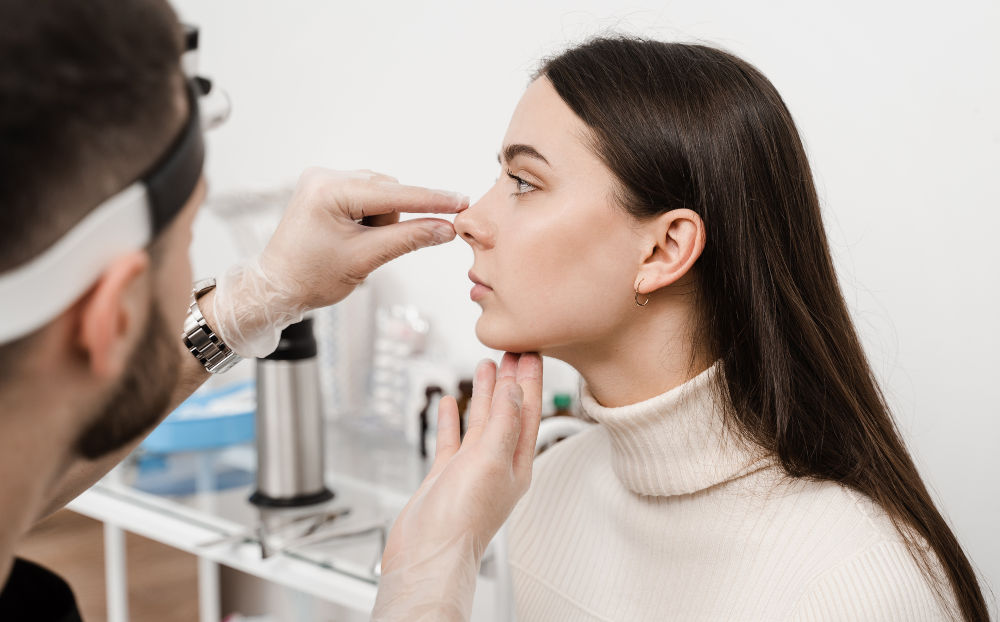
You wake up a few weeks after your procedure, look in the mirror, and notice that one side of your nose doesn’t quite match the other. It’s a common moment of doubt: is this a permanent result or just a phase of recovery? Experiencing nostril asymmetry after rhinoplasty can be deeply unsettling, especially when you’ve been looking forward to a balanced, harmonious profile. You likely feel a mix of frustration and social anxiety, wondering if everyone else notices the slight tilt or unevenness that seems so obvious to you.
I understand that this uncertainty is stressful, but it’s important to remember that healing is rarely a perfectly symmetrical process. This guide provides the clarity you need to distinguish between lingering inflammation and actual structural issues. We’ll examine why the left and right sides of the nose often heal at different rates, what signs indicate a need for professional intervention, and how a Toronto revision specialist can help you achieve the refined, naturalistic result you originally envisioned. By the end of this article, you’ll have a clearer perspective on your recovery timeline and the confidence to take the next step in your aesthetic journey.
Key Takeaways
- Understand why nostril asymmetry after rhinoplasty is a normal part of the healing process as swelling often dissipates at different rates on each side of the nose.
- Learn how to distinguish between temporary edema and permanent structural issues by evaluating the texture and firmness of the nostril rim.
- Explore the range of corrective options available, from subtle non-surgical refinements to comprehensive revision rhinoplasty for restoring facial harmony.
- Identify the specific milestones in your recovery timeline that indicate when it is appropriate to consult a board-certified specialist in Toronto or Newmarket.
- Gain insight into how advanced digital imaging helps you visualize realistic outcomes and set achievable goals for your revision procedure.
Table of Contents
- Understanding Nostril Asymmetry After Rhinoplasty: Is It Normal?
- The Healing Timeline: Why Patience is the Best Medicine
- Identifying Permanent Asymmetry vs. Temporary Changes
- Corrective Options: How to Realize Your Aesthetic Goals
- Consulting a Revision Specialist in the Greater Toronto Area
- Reclaiming Your Confidence and Profile
- Reclaiming Your Confidence and Profile
Understanding Nostril Asymmetry After Rhinoplasty: Is It Normal?
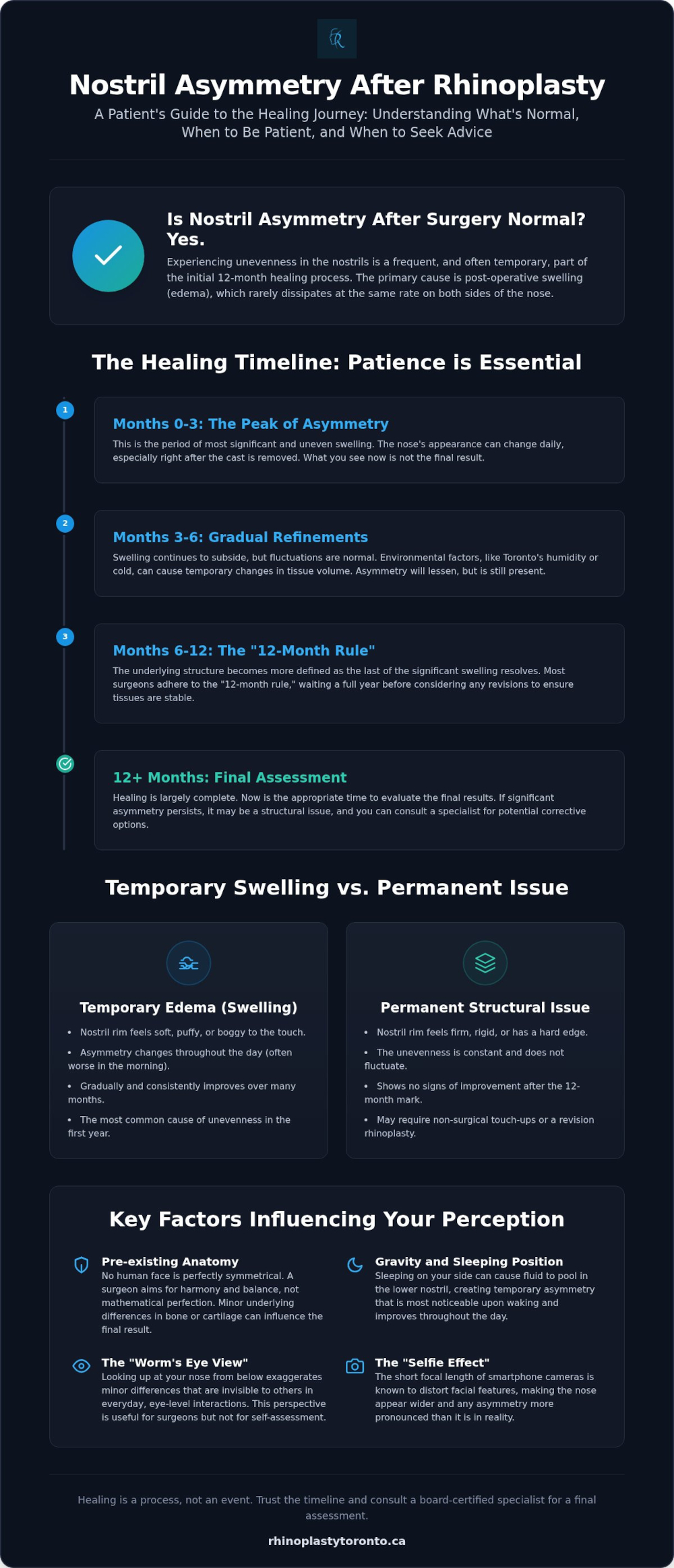
It is entirely natural to feel a surge of anxiety when you first examine your results in a mirror and notice that your nostrils don’t appear to be identical. However, experiencing nostril asymmetry after rhinoplasty is a frequent, often temporary occurrence during the initial twelve months of the healing process. During this period, the delicate tissues of the nose undergo significant internal changes that can temporarily skew the external appearance of symmetry.
We must recognize that human anatomy is naturally asymmetrical. Even before any surgical intervention, most individuals possess slight variations in their facial skeletal structure or soft tissue distribution. A skilled surgeon’s objective is to achieve aesthetic harmony and a balanced profile rather than mathematical perfection. Post-operative edema serves as the primary culprit for early-stage nostril unevenness as fluid often collects disproportionately within the surgical site.
Many patients find themselves obsessing over the “worm’s eye view,” which is the perspective looking directly up from the base of the nose. While this angle is useful for surgeons during the procedure, it often exaggerates minor differences that are completely invisible from the front or side profiles. In your daily interactions, people observe your face at eye level; they rarely, if ever, see your nose from such an extreme underneath angle. Because of this, minor deviations that feel massive to you are often entirely imperceptible to those around you.
The Role of the Nasal Alae and Septum
The position of your septum serves as the structural foundation for your nostrils. If the septum is even slightly off-centre, it can influence the way the alae, or the outer wings of the nostrils, are positioned. What is Rhinoplasty? This complex procedure often involves restructuring these foundational elements to improve both form and function. When a surgeon performs tip narrowing or an alar base reduction, the circumference and tension of the nostrils are altered. During the first few months, cartilage memory can cause subtle shifts as the resilient nasal tissues attempt to settle into their new configuration.
Visual Perception vs. Reality
Our modern reliance on digital photography often skews our perception of our own faces. The “selfie effect” is a documented phenomenon where the short focal length of smartphone cameras distorts facial features, making minor nostril asymmetry after rhinoplasty look much more pronounced than it is in person. It is also helpful to distinguish between “static” asymmetry, which is visible when the face is at rest, and “dynamic” asymmetry, which appears only when you engage your facial muscles to smile or speak. Most of the time, the variations you see in the mirror are so subtle that friends and family won’t even realize they exist.
The Healing Timeline: Why Patience is the Best Medicine
Recovery from a nasal procedure is rarely a linear journey. It’s a series of subtle shifts and gradual refinements that can take a full year to complete. One of the most challenging aspects of this period is realizing that swelling, or edema, does not dissipate at the same rate on both sides of the face. This uneven distribution of fluid is the most frequent cause of temporary nostril asymmetry after rhinoplasty. If you find yourself waking up with one side looking more congested or “flatter” than the other, gravity is likely the culprit. Sleeping on your side often causes fluid to pool in the lower nostril, creating a temporary imbalance that usually improves as you move throughout the day.
Environmental factors in the Greater Toronto Area also play a surprising role in your recovery. Our local climate, characterized by biting winter cold and heavy summer humidity, can cause noticeable fluctuations in nasal tissue volume. Extreme cold tends to constrict blood vessels, while high humidity can exacerbate fluid retention and swelling. These seasonal changes mean your nose might look slightly different in January than it does in July. Because the tissues remain so reactive during this period, most surgeons strictly adhere to the “12-month rule,” refusing to consider a revision until the one-year mark. Rushing into a second surgery while tissues are still inflamed significantly increases Rhinoplasty Risks and can compromise the final aesthetic outcome.
The First Three Months: The Peak of Asymmetry
Immediately after your cast is removed, the nose often feels remarkably stiff. This lack of pliability, combined with internal sutures that are still dissolving or integrating, can make the nostrils appear skewed. It is the most emotionally volatile stage of recovery because the initial results are obscured by the body’s natural inflammatory response. Managing your expectations now is vital; the nose you see at eight weeks is not the nose you will have at eight months.
Six to Twelve Months: The Definition Phase
As you move into the latter half of the year, the skin begins to “shrink-wrap” more tightly over the new cartilage framework. Paradoxically, minor asymmetries might actually become more apparent during this phase as the “padding” of the swelling disappears. This is simply the true structure of the nose revealing itself. By the twelve-month mark, scar tissue has matured and the final shape has stabilized.
Identifying Permanent Asymmetry vs. Temporary Changes
Determining whether your concern is a passing phase of recovery or a permanent structural trait requires a methodical approach. Texture provides a vital clue. Soft tissue swelling typically feels squishy or “doughy” to the touch, whereas structural issues involving cartilage or bone will feel firm and unyielding. If you are experiencing nostril asymmetry after rhinoplasty that feels soft and pliable, it is highly likely that your body is still processing post-operative fluid. As this fluid drains, the tissues will contract, often resolving the perceived imbalance without further intervention.
Beyond aesthetics, you should assess the functional integrity of your nasal passages. Does the visible asymmetry correspond with a new difficulty in breathing through one side? If the unevenness is paired with a persistent internal obstruction, it may indicate a structural shift or a septal issue that requires professional attention. It is also important to consider your pre-operative anatomy. Patients with a history of severe nasal trauma or a significantly deviated septum often have underlying skeletal imbalances that influence the final nostril shape. Significant, worsening asymmetry should always be reported to your surgical centre.
When to Contact Your Surgeon
While most changes are part of a healthy recovery, you should remain vigilant for specific warning signs. Red flags include sudden changes in the shape of the nose, localized pain that intensifies rather than fades, or a new, persistent breathing obstruction. Attending all scheduled follow-up appointments at our Toronto or Newmarket locations is the best way to ensure your healing remains on track. To help your surgeon provide the best care, try to take standardized photos every few weeks from the same angle and in consistent lighting to document how your nose is settling.
Structural vs. Positional Asymmetry
Sometimes the issue isn’t the nostril opening itself, but the surrounding architecture. Alar rim retraction occurs when the edge of the nostril is pulled upward, making that side look “higher” or more flared than its counterpart. Evaluating nostril asymmetry after rhinoplasty also involves looking at the columella, the bridge of tissue separating your nostrils. If you have a “hanging columella,” where the bridge extends too far downward, it can create the illusion of uneven nostrils. These positional issues are often related to the support provided by the underlying cartilage and may require a different approach than simple skin or soft tissue adjustments.
Corrective Options: How to Realize Your Aesthetic Goals
If the twelve-month healing milestone passes and you still observe nostril asymmetry after rhinoplasty, it may be time to move from patient observation to active correction. While the body’s natural healing process is remarkable, structural imbalances often require the intervention of a specialist to achieve the desired harmony. Whether your concerns are minor or involve significant structural collapse, modern facial plastic surgery offers both surgical and non-surgical pathways to restore balance and confidence.
Non-Surgical Refinements
Many patients are surprised to learn that minor contour irregularities can often be addressed without returning to the operating room. Hyaluronic acid fillers, frequently referred to as “liquid rhinoplasty,” can be used to balance minor rim depressions or fill small notches that create an uneven look. The primary benefit of this approach is the immediate result with virtually no downtime. However, using fillers in a nose that has already undergone surgery requires extreme caution due to changes in the local blood supply. This is why we typically wait until the one-year mark to ensure the tissues are stable and healthy enough for injection. While fillers don’t offer a permanent fix, they provide a sophisticated way to “test” a more symmetrical look before committing to further surgery.
Surgical Revision Techniques
When the issue is rooted in the underlying framework, revision rhinoplasty is the most effective solution for correcting structural nostril issues. This procedure addresses the complexities of scar tissue and structural deficiencies that a primary surgery may not have fully resolved. For instance, if a nostril appears to be collapsing, a surgeon can use cartilage grafting to reinforce the alar rim. Repositioning the lower lateral cartilages is another common technique used to improve symmetry from the front and the base. If the asymmetry is caused by the width of the nostrils, a targeted alar base reduction can equalize the flare and create a more refined appearance. Addressing nostril asymmetry after rhinoplasty through these surgical means allows for a permanent correction of the nasal architecture.
Choosing a surgeon who specializes in revision work is critical, as these procedures require a higher level of precision and artistic judgment. At our surgical centre, Dr. Rival uses advanced digital imaging to help you realize your aesthetic goals by visualizing potential outcomes before any incisions are made.
Consulting a Revision Specialist in the Greater Toronto Area
Addressing nostril asymmetry after rhinoplasty requires more than just technical skill; it demands an intimate understanding of how previous surgical changes have altered the nasal architecture. Revision procedures are significantly more complex than primary surgeries because the surgeon must work through existing scar tissue and often repair compromised cartilage. This is why choosing a specialist with a dedicated focus on the face is paramount for those seeking to restore facial balance. A refined, expert eye is necessary to determine whether the unevenness is a result of structural collapse, skin contracture, or underlying skeletal issues.
Dr. Richard Rival brings a unique perspective to these challenging cases through his double board certification in both Facial Plastic Surgery and Otolaryngology. This dual expertise ensures that while the aesthetic goal of symmetry is pursued, the internal breathing function of the nose is never compromised. With over 20 years of specialized experience in the Greater Toronto Area, he has refined a methodical approach to identifying the root cause of unevenness and developing a precise corrective plan that prioritizes a naturalistic outcome.
To bridge the gap between a patient’s concerns and the surgical reality, our Toronto and Newmarket offices utilize advanced digital imaging. This technology allows you to see a simulated projection of your results, helping to align your expectations with what can realistically be achieved through a revision. It serves as a vital communication tool, ensuring that both you and Dr. Rival share a clear vision for the final outcome before any incisions are made. This process fosters a sense of safety and trust, allowing you to move forward with confidence.
The Importance of Experience
Experience is the most critical factor when navigating the complexities of a secondary procedure. A seasoned surgeon understands how to manage the unpredictable nature of scar tissue and how to harvest graft material if the original nasal support has been weakened. Dr. Rival’s two decades of practice allow him to anticipate these challenges, providing a level of precision that is essential for achieving a result that looks harmonious and unoperated. He acts as a dedicated guide, helping you move from the frustration of an uneven result to a state of aesthetic completion.
Planning Your Consultation
Preparing for your visit is a collaborative step in your journey toward symmetry. If available, please bring your previous operative reports and “before” photos from your initial surgery, as these provide a roadmap of the changes already made to your nasal structure. During the meeting, you’ll have the opportunity to discuss your breathing and aesthetic concerns openly.
Reclaiming Your Confidence and Profile
The journey toward a refined nasal profile requires both patience and professional guidance. While the first year of recovery is often defined by the slow resolution of post-operative edema, persistent nostril asymmetry after rhinoplasty may eventually require a more specialized approach. Understanding the distinction between temporary swelling and permanent structural shifts is the first step in ensuring your aesthetic results align with your original goals. Whether you are navigating the early stages of healing or have already surpassed the one-year mark, your concerns deserve a thorough, expert evaluation.
Dr. Richard Rival, a double board-certified facial plastic surgeon with over 20 years of specialized experience, provides the precision necessary for complex revision work. By utilizing advanced digital imaging at our Toronto and Newmarket offices, he helps you visualize a realistic path toward facial harmony. If you are ready to address lingering imbalances and move forward with a personalized plan, you can Book a Revision Consultation with Dr. Rival in Toronto or Newmarket. You don’t have to navigate your recovery alone; expert care is available to help you realize the balanced, naturalistic look you’ve been seeking.
Frequently Asked Questions
Is it normal for one nostril to be more swollen than the other after surgery?
It is entirely normal for swelling to be distributed unevenly during the first several months of recovery. The body’s inflammatory response does not always follow a symmetrical pattern; consequently, one side of the nose may retain fluid longer than the other. This temporary imbalance often makes the nostrils appear skewed, but the asymmetry typically resolves as the tissues settle and the edema dissipates.
How long should I wait before considering a revision for uneven nostrils?
Most surgeons require patients to wait at least 12 months before evaluating the need for a secondary procedure. This duration allows the nasal framework to fully stabilize and ensures that all residual swelling has vanished. Rushing into a revision too early can be counterproductive, as the surgeon may be operating on tissues that are still undergoing subtle, natural changes.
Can sleeping on my side cause my nostrils to heal asymmetrically?
Sleeping on your side can cause fluid to pool in the lower half of the face, leading to a temporary “flatter” appearance of one nostril upon waking. While this habit can cause daily fluctuations in your appearance, it rarely results in permanent structural nostril asymmetry after rhinoplasty. Surgeons generally recommend sleeping on your back with your head elevated for the first few weeks to minimize this effect.
Will my nostrils look more symmetrical once the tip drops?
The nostrils often appear more balanced once the nasal tip reaches its final, lower position. During the early stages of healing, the tip is frequently over-rotated and stiff, which can pull the nostril rims into an unnatural or uneven shape. As the tip “drops” and the surrounding muscles regain their natural pliability, the nostrils usually settle into a more harmonious and symmetrical configuration.
Can non-surgical fillers fix nostril asymmetry after rhinoplasty?
Hyaluronic acid fillers can be an effective way to camouflage minor contour irregularities or small depressions along the nostril rim. This non-surgical approach provides a temporary solution for patients who wish to avoid a second surgery. However, it is vital to wait until the nose is fully healed, as injecting fillers into post-surgical tissue requires a deep understanding of the altered blood supply in the area.
Why do my nostrils look uneven in selfies but fine in the mirror?
Smartphone cameras often use wide-angle lenses that distort facial features when held at close range. This phenomenon can significantly exaggerate nostril asymmetry after rhinoplasty, making minor variations look much more dramatic than they appear in person. Mirrors provide a more accurate representation of your three-dimensional appearance, whereas a selfie can flatten and skew the proportions of the nasal base.
What are the risks of a second surgery to fix nostril shape?
A second surgery involves navigating existing scar tissue and potentially reinforcing weakened cartilage with grafts. These complexities mean that revision procedures often have a longer operative time and a more cautious recovery period than primary surgeries. Choosing a double board-certified specialist is the most effective way to mitigate these risks and ensure both the aesthetic and functional health of the nose.
Does insurance cover revision rhinoplasty for nostril asymmetry?
In Ontario, OHIP coverage is typically reserved for procedures that are medically necessary to restore function, such as correcting a severe breathing obstruction. If the revision is being performed purely to improve the cosmetic symmetry of the nostrils, it is considered an elective aesthetic procedure. Patients should consult with their surgical centre to understand the specific costs associated with revision work and any available payment options.