
After rhinoplasty, it is very easy to start looking at your nose differently. You see it from the left, then the right. You compare yesterday’s photograph with today’s. One nostril suddenly seems higher. The bridge looks straight in the mirror but slightly uneven in a photograph. The tip appears fuller on one side.
A nose that looks different from each side during the first weeks or months after rhinoplasty does not automatically mean that something has gone wrong. Uneven swelling, bruising, tissue healing, pre-existing asymmetry, and slower settling of the nasal tip can all temporarily change how the two sides look. Timing is what matters: a difference noticed three weeks after surgery has a very different significance from one that remains after healing is substantially complete.
Dr. Richard Rival’s current recovery guidance specifically notes that swelling does not always disappear evenly and that one side may remain more swollen than the other during recovery. The tip is also one of the slowest parts of the nose to settle.
The difficult part for patients is knowing when to be patient and when to ask for another examination.
Table of Contents
- Is It Normal for the Nose to Look Uneven After Rhinoplasty?
- Why One Side Can Stay More Swollen
- The Role of Pre-Existing Asymmetry
- Why Selfies Can Make the Difference Look Worse
- Different Types of Asymmetry During Healing
- How Long Should You Wait Before Judging Your Nose?
- When Should You Contact Your Surgeon?
- Does Asymmetry Mean You Need Revision Rhinoplasty?
- What Dr. Rival Evaluates at Follow-Up
- Balance Matters More Than Perfect Symmetry
- Frequently Asked Questions
Is It Normal for the Nose to Look Uneven After Rhinoplasty?
Some unevenness is common while the nose is healing.
Rhinoplasty creates swelling not only in the skin you can see but also in the soft tissues around the altered nasal structures. That swelling gradually reduces rather than disappearing at one predictable moment. Objective three-dimensional research has confirmed that postoperative edema can continue to mask the final contour for months. In one prospective 3D study, approximately two-thirds of postoperative edema had resolved after the first month, around 95% after six months, and about 97.5% at one year. Those averages describe a group, not a deadline for an individual patient’s nose.
Just as importantly, the two sides need not look identical while this is happening.
One side can appear wider. A nostril can temporarily seem higher or differently shaped. The tip may look rounder on one side, while shadows make the bridge appear straighter from one angle than another. Bruising can also be more obvious on one side.
Dr. Rival’s current postoperative material describes this uneven settling directly: swelling may decrease at different rates from one side to the other, and the appearance can fluctuate during recovery.
That is very different from saying that every asymmetry is normal. It means that asymmetry has to be interpreted in the context of how long ago surgery took place, what was changed during the operation, what the nose looked like beforehand, and whether the difference is becoming smaller or more pronounced.
Why One Side Can Stay More Swollen
Patients often expect swelling to behave symmetrically because surgery was performed on one nose. Healing is not quite that orderly.
A crooked nose, for example, may require different manoeuvres on the two sides because the starting anatomy is different. Bone, cartilage, septal position, and existing asymmetry may all influence how much work is required in a particular area. That means the tissues do not necessarily have an identical recovery on the left and right.
Position can also alter how swelling looks from day to day. After spending hours asleep, patients sometimes notice that the nose appears puffier or that congestion feels stronger on one side. Dr. Rival’s guidance on postoperative breathing likewise notes that internal swelling can be uneven, so one nasal passage may temporarily feel more blocked than the other.
Skin and soft-tissue characteristics matter as well. A thick-skinned nasal tip tends to reveal its eventual definition more slowly, and more complex or revision procedures can take longer to settle.
None of these explanations can diagnose an individual nose from a photograph. They simply explain why “one side is bigger today” is not, by itself, proof of a surgical problem.
Your Nose May Have Been Asymmetric Before Surgery
This is surprisingly easy to overlook.
Human faces are not mirror images from left to right. The eyes, cheeks, jaw, lips, and brows usually contain small differences, and the nose is no exception. Nasal bones can deviate. Cartilage may be stronger or differently shaped on one side. The septum may not sit exactly in the midline, and the nostrils may have been slightly different before surgery.
A patient with a clearly crooked nose may already know this. Someone undergoing rhinoplasty for a hump or tip concern may never have paid much attention to a small pre-existing difference.
After surgery, attention changes.
You may now be looking at your nose several times a day, photographing it from angles you never photographed before, enlarging images, and comparing one side with the other. A difference that existed before surgery can suddenly feel new simply because the nose is being inspected far more closely.
This is one reason preoperative photographs are useful when evaluating postoperative asymmetry. They provide a record of the original nose and the surrounding face rather than relying on memory.
Rhinoplasty can improve significant deviation and imbalance, but it cannot make an inherently asymmetric human face mathematically symmetrical. Correcting a crooked nose is also technically demanding because nasal deviation can involve several three-dimensional structures rather than a single misplaced bone.
Patients interested in how these structural problems are approached can read Dr. Rival’s information on rhinoplasty in Toronto.
Why Your Nose Can Look Different in Photos Than in the Mirror
Before deciding that the nose has changed shape, it is worth looking at how you are looking at it.
Smartphone photographs are not neutral measurements of facial anatomy. A close selfie can distort proportions because the camera is so near the face. Small changes in camera height, head tilt, lens position, and distance can make one side of the nose appear more prominent. Light coming from one direction creates shadows along the bridge and tip, which can exaggerate an irregularity that is much less noticeable in ordinary conversation.
There is another deceptively simple issue: the face you know from the mirror is reversed. A photograph may show the orientation other people see, making familiar facial asymmetries suddenly look unfamiliar.
Comparing two separate profile photographs can be particularly misleading if the head was turned even slightly differently between them.
For meaningful follow-up, consistent clinical photographs are more useful: similar lighting, camera distance, head position, and views. Even then, photographs complement examination; they do not replace it.
The practical lesson is not to ignore photographs altogether. It is to avoid treating every close-up selfie as an objective test of whether your rhinoplasty is healing correctly.
Different Types of Asymmetry During Rhinoplasty Healing
Not every uneven appearance has the same explanation. The location of the difference often provides useful context.
Uneven Swelling
This is among the simplest explanations early in recovery. One side of the bridge or tip may retain more fluid and look fuller even while both sides are gradually improving.
The important feature is the pattern over time. Healing can fluctuate from day to day, but the overall direction should eventually be toward less swelling and greater definition. Dr. Rival notes that visible improvement occurs gradually and that asymmetry from uneven swelling can be part of this process.
Tip Asymmetry
The tip frequently causes the most anxiety because it settles slowly.
It may feel firm and look wider or less defined than expected. One side can appear rounder, higher, or more swollen. Small differences become particularly visible because the tip sits at the centre of the face and casts shadows around the nostrils.
The upper bridge generally becomes easier to evaluate sooner, while tip refinement may continue for many months. Dr. Rival’s current material states that complete settling can take 12 months or longer, particularly when substantial tip work was performed, the skin is thicker, or the case is more complex.
There is a more detailed explanation in his tip rhinoplasty recovery timeline.
Nostril Asymmetry
Nostrils attract a disproportionate amount of attention after surgery.
Early differences may reflect swelling around the tip and alar tissues, temporary tension during healing, or asymmetry that existed before surgery. Because tip position continues to evolve, the nostril outline can also look different as surrounding swelling falls.
Persistent nostril asymmetry is another matter. It can sometimes be related to structural differences in the nasal tip or alar region, and published surgical literature emphasises identifying the underlying cause before choosing a corrective technique.
For this reason, an early photograph is rarely enough to decide that a nostril needs correction.
A Bridge That Looks Crooked or Uneven
A healing bridge can look wider or higher on one side because of edema. Shadow can magnify that appearance.
Patients who began with a crooked nose are somewhat different because the original deformity may have involved the nasal bones, cartilage, and septum. Correcting these noses requires three-dimensional planning, and residual or recurrent deviation can sometimes occur even after substantial improvement.
If an apparent bend remains once swelling has had sufficient time to settle, the surgeon can distinguish soft-tissue swelling from a genuine structural irregularity much more reliably through examination than through selfies.
One Side Feels More Blocked
Visual asymmetry is sometimes accompanied by a functional concern: one side feels harder to breathe through.
Early after surgery, internal swelling and healing can make nasal breathing variable, and Dr. Rival notes that one side may feel more blocked than the other for this reason.
Persistent or worsening obstruction deserves assessment, particularly if breathing had initially improved and then deteriorated, or if it is accompanied by another new symptom.
How Long Should You Wait Before Judging the Final Result?
This is often the question patients really want answered.
Unfortunately, there is no single week when everyone can stop thinking about swelling.
During the first few weeks, the nose is unmistakably healing. Bruising changes quickly, swelling moves, and the tissues can feel firm. The upper part of the nose usually becomes more defined sooner than the tip. Over the following months, smaller changes continue as edema falls and tissues settle around the altered bone and cartilage.
Three-dimensional research helps put that process into perspective. Nasal edema continues to decline throughout the first postoperative year rather than disappearing after the splint comes off.
Dr. Rival similarly advises that the final result may take 12 months or longer to become clear, with particularly slow refinement around the tip and in thicker-skinned, complex, or revision cases.
That does not mean patients have to ignore every concern for a year. Follow-up appointments exist precisely so the surgeon can watch healing as it develops. It means that an early cosmetic irregularity should not automatically be labelled permanent while the nose is still changing.
For a fuller stage-by-stage explanation, see Dr. Rival’s rhinoplasty recovery timeline.
A Useful Way to Think About Timing
| What you notice | Early in recovery | Later in recovery |
|---|---|---|
| One side looks fuller | Often related to uneven swelling | Persistent fullness may deserve closer examination |
| Tip looks uneven | Tip swelling can distort definition for months | Stable asymmetry is easier to assess once swelling has largely resolved |
| Nostrils differ | May reflect swelling, tension, or pre-existing anatomy | Persistent differences can sometimes be structural |
| Bridge looks slightly crooked | Swelling and shadows can alter the apparent line | A lasting deviation may need structural assessment |
| One side feels blocked | Internal swelling can temporarily affect airflow | Ongoing obstruction should be discussed with the surgeon |
| Nose looks different in selfies | Camera distance, angle, head position, and lighting matter at every stage | Standardised photographs and examination are more useful than casual selfies |
The table is intentionally not a diagnostic tool. Its purpose is to show why the same observation can mean something very different at one month than it does after the nose has matured.
When Should You Contact Your Surgeon?
You do not need to decide on your own whether a concern is “important enough.”
Routine asymmetry that is already being monitored can often be discussed at a scheduled postoperative visit. However, a sudden change is different from a gradually evolving cosmetic concern.
Contact your surgeon if you develop a significant new increase in swelling, severe or worsening pain, new nasal trauma, concerning bleeding, noticeably worsening breathing, or another change that does not fit the recovery instructions you were given. Postoperative bleeding and other complications require individual assessment rather than online diagnosis.
A less urgent but persistent concern also deserves a conversation. If one side consistently looks different and the difference is not diminishing as healing progresses, show it to your surgeon rather than repeatedly trying to determine the cause from photographs.
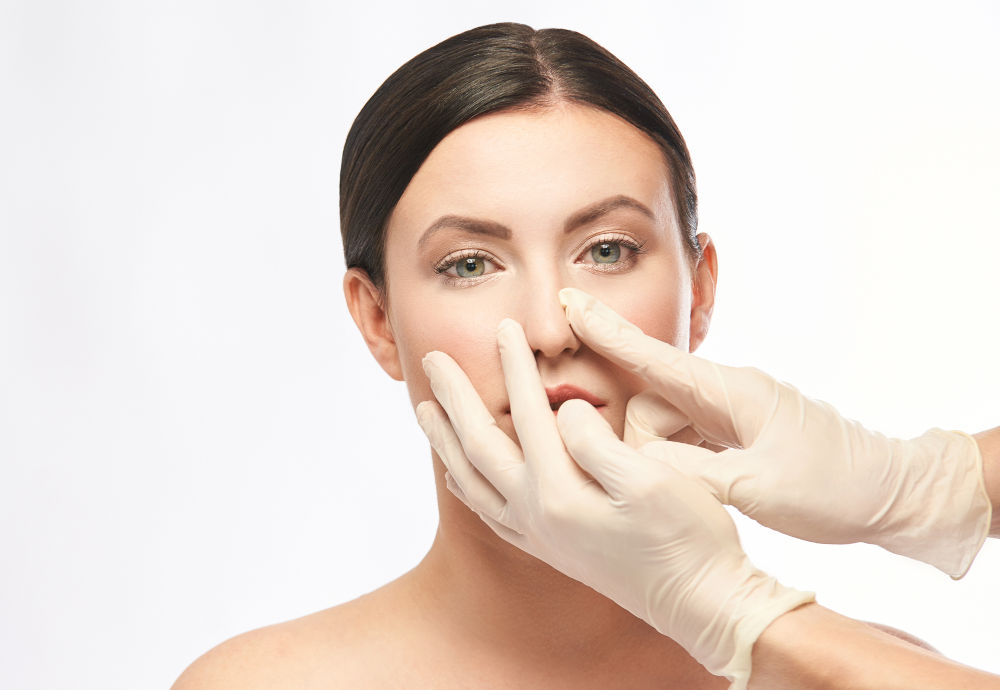
Dr. Rival can compare the current nose with preoperative images, examine both its external shape and internal airway, and determine whether the difference is likely to represent residual swelling, normal facial asymmetry, scar tissue, or a structural issue.
Does Asymmetry Mean You Need Revision Rhinoplasty?
Usually, that conclusion cannot be made early.
Revision rhinoplasty is surgery performed after a previous rhinoplasty to address a residual or new cosmetic problem, a functional problem, or both. Dr. Rival’s revision material specifically includes asymmetry and breathing difficulties among the concerns that can bring patients for secondary assessment.
But an uneven nose during recovery and a nose that requires revision are not the same thing.
If swelling is still changing, operating too soon can make assessment difficult because the surgeon is not yet looking at the stable result. Revision surgery is also more complex than primary rhinoplasty: previous surgery creates scar tissue and may have altered or removed cartilage that would normally be available for support. Dr. Rival’s current revision guidance therefore places considerable emphasis on understanding what was done previously, what currently bothers the patient, and how the internal structure and breathing have been affected.
If the difference remains after adequate healing, however, the discussion changes. A stable structural deviation, significant tip or nostril asymmetry, contour irregularity, or persistent breathing problem may warrant formal revision assessment.
Patients in that position can read more about revision rhinoplasty in Toronto.
What Dr. Rival Looks at During a Follow-Up or Revision Consultation
A useful consultation is not simply a matter of looking at the nose from the front and deciding whether the left and right sides match.
The first question is when the surgery occurred. An asymmetry at six weeks cannot reasonably be assessed in the same way as one that has remained stable much later.
Dr. Rival may also consider what the original nose looked like and what was done during surgery. Preoperative photographs can reveal whether the face, bridge, tip, or nostrils were already asymmetric. Operative history becomes particularly important after surgery performed elsewhere.
The examination can then look at the relationship between several features:
- nasal bone position and the line of the bridge;
- tip shape, position, and support;
- nostril and alar shape;
- septal alignment;
- skin and soft-tissue thickness;
- areas that may still be swollen or scarred;
- nasal airflow;
- whether the concern changes between the frontal, profile, and three-quarter views.
Dr. Rival is a facial plastic surgeon who performs rhinoplasty and revision rhinoplasty in Toronto and Newmarket. His current revision material describes consultation as an assessment of both the outside of the nose and its internal structure, particularly where breathing has also changed.
That distinction matters because a cosmetic irregularity and a functional problem do not necessarily require the same solution.
The Goal Is Balance, Not Perfect Symmetry
There is an understandable tendency after rhinoplasty to search for symmetry as proof that the operation succeeded.
Real faces do not work that way.
Even an excellent surgical result exists within a face whose two sides are slightly different. The meaningful questions are whether the nose is more balanced with the surrounding features, whether its shape looks natural, whether the improvement matches the agreed surgical goals, and whether the nose functions properly.
A tiny discrepancy that appears only when two enlarged profile photographs are placed next to each other is not the same problem as a visible structural deviation. Likewise, substantial asymmetry should not be dismissed simply because some unevenness is normal.
The aim is neither perfect mathematical symmetry nor endless reassurance. It is an informed assessment at the appropriate stage of healing.
If your nose looks different from each side after rhinoplasty and you are unsure whether you are seeing normal recovery or a lasting change, a follow-up or consultation with Dr. Rival can
Frequently Asked Questions
Why does one side of my nose look more swollen after rhinoplasty?
Healing does not always progress evenly. One side may temporarily retain more swelling because of differences in the surgery performed, the original anatomy, soft-tissue response, or positioning during recovery. Uneven swelling is particularly common during the early healing period and does not by itself mean that the result is permanently asymmetric.
Is it normal for my nostrils to look uneven after rhinoplasty?
Some nostril unevenness can occur while the tip and surrounding tissues are swollen. Pre-existing differences between the nostrils may also become more noticeable when you begin examining the nose closely after surgery. Persistent nostril asymmetry should be evaluated once the surgeon can distinguish remaining swelling from a structural difference.
How long does rhinoplasty asymmetry take to improve?
There is no single timeline for every patient. Obvious swelling falls substantially during the first weeks and months, but smaller changes can continue throughout the first year. The nasal tip often takes longer than the upper bridge to refine, particularly with thicker skin or more extensive tip surgery.
Can swelling make my nose look crooked after rhinoplasty?
Yes. Uneven swelling can make one side appear wider or make the bridge look temporarily off-centre. Lighting and shadows can exaggerate the effect. A surgeon examining the nose over time is better able to determine whether an apparent deviation reflects swelling or the underlying structure.
Why does my nose look different in selfies after rhinoplasty?
Close smartphone photographs can distort facial proportions. Camera distance, lens position, lighting, head tilt, and shadows can all change the apparent shape of the nose. Comparing standardised photographs taken under similar conditions is more useful than comparing casual selfies from different angles.
Does uneven healing mean my rhinoplasty went wrong?
Not necessarily. The two sides of the nose can swell and settle differently, particularly during the first stages of recovery. What matters is the timing, the pattern of change, the original anatomy, and whether the asymmetry continues after healing has progressed.
When should I consider revision rhinoplasty for asymmetry?
Revision may be considered when an asymmetry is structural, affects breathing, remains important to the patient, and persists after enough healing has occurred for a reliable assessment. A revision decision usually should not be based on an early postoperative appearance while substantial swelling is still present.
Is the nasal tip usually the last area to heal?
Often, yes. The tip commonly retains swelling and firmness longer than the upper bridge. Its definition can continue changing for many months, which is why early tip asymmetry may look quite different later in recovery.
What if my nose was crooked before rhinoplasty?
Pre-existing deviation can influence both the surgical plan and the final degree of symmetry. Crooked noses may involve the bones, cartilage, and septum together. Rhinoplasty can substantially improve that imbalance, but a perfectly straight nose cannot be guaranteed, particularly within a naturally asymmetric face.
Should I send photographs to my surgeon if I am worried?
Photographs can help communicate what you are seeing, especially if there has been a sudden change. They cannot always distinguish swelling from structural asymmetry, however. Your surgeon may recommend an in-person examination depending on the concern and where you are in recovery.
Editorial Sources
- Pavri S, Zhu VZ, Steinbacher DM. “Postoperative Edema Resolution following Rhinoplasty: A Three-Dimensional Morphometric Assessment.” This is real. It was published in Plastic and Reconstructive Surgery in 2016, PubMed PMID 27879585, and the abstract specifically supports the figures we used: roughly two-thirds of edema resolved at one month, 95% at six months, and 97.5% at one year.
- Schreiber JE, et al. “Discovering the True Resolution of Postoperative Swelling After Rhinoplasty Using 3-dimensional Photographic Assessment.” This is real and available through PubMed Central. It is a 2019 publication using 3D photographic assessment of postoperative swelling.
- Suh MK. “Correction of deviated nose.” This is real. It was published in Archives of Craniofacial Surgery in 2018 and is available in PubMed Central. It supports the point that correction of a deviated/crooked nose is a three-dimensional structural problem involving different parts of the nasal framework.
- Dibelius G, et al. “Rhinoplasty Tip-Shaping Surgery.” StatPearls / NCBI Bookshelf. Real and currently available through NCBI. It covers nasal tip anatomy, support, projection, rotation, asymmetry, and functional considerations.
- Dr. Rival, “Rhinoplasty Swelling Stages and Healing Timeline.” Real, live on the official Rhinoplasty Toronto site, dated April 14, 2026. It explicitly discusses uneven swelling, the tip remaining swollen longer, and final refinement taking around six to 12 months or sometimes longer.
- Dr. Rival, Revision Rhinoplasty. Real and live on his official site. It addresses persistent cosmetic and functional concerns after previous rhinoplasty and supports the revision discussion.