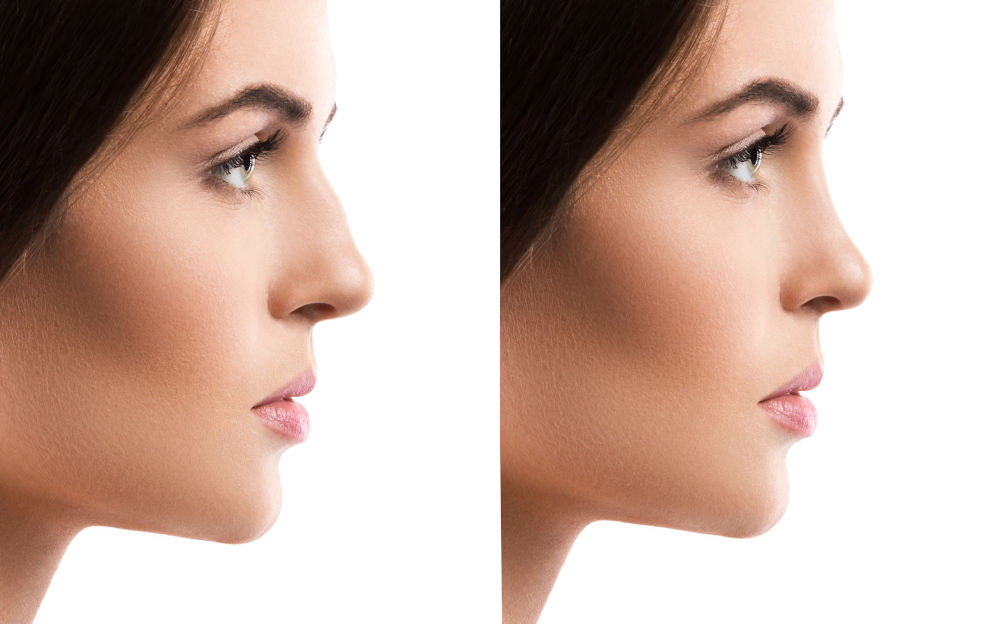
Choosing revision rhinoplasty is rarely an easy decision. Many patients have already been through surgery, recovery, and months of waiting, only to find that the final result does not meet their expectations or that breathing has become a concern. While the change they want may seem small, revision rhinoplasty is often more complex than primary rhinoplasty because the surgeon must work with scar tissue, altered cartilage, and changes from the previous operation. Careful planning is essential to achieve a natural-looking, well-supported result.
Key Takeaways
- Revision rhinoplasty is a second or later operation on a nose that has already had rhinoplasty.
- The second surgery is usually more complex because the normal anatomy may have been changed by the first operation.
- Scar tissue, limited cartilage, weaker nasal support, and breathing problems can all affect the surgical plan.
- A revision procedure may involve small refinements, but many cases also require rebuilding or reinforcing parts of the nose.
- Cartilage grafting may be needed. Depending on the case, cartilage may come from the septum, ear, or rib.
- Healing can take longer after revision surgery, especially around the nasal tip.
- Patients usually need to wait until the nose has fully healed before deciding on another operation, unless there is a functional or medical reason to be assessed sooner.
- The aim is not a perfect nose. It is a better, more stable, more natural-looking result, with improved breathing where that is possible.
Table of Contents
- What Primary Rhinoplasty Means
- What Revision Rhinoplasty Means
- The Main Difference Between a First and Second Rhinoplasty
- Why Revision Rhinoplasty Is More Complex
- When a Second Rhinoplasty May Be Worth Discussing
- Choosing a Surgeon for Revision Rhinoplasty
- What Revision Rhinoplasty Can Improve
- What Happens During a Revision Rhinoplasty Consultation
- Is Revision Rhinoplasty More Expensive Than Primary Rhinoplasty?
- FAQ
What Primary Rhinoplasty Means
Primary rhinoplasty simply means the first operation on the nose.
For one person, that may mean reducing a hump. For another, it may mean refining the tip, narrowing the bridge, straightening a crooked nose, improving nostril shape, or correcting a breathing problem. Many rhinoplasty patients have both cosmetic and functional concerns, even if one matters more to them at the start.
The key point is that the surgeon is working with the original framework of the nose.
The cartilage has not yet been cut or removed. The nasal bones have not been surgically moved. The soft tissue has not gone through previous healing. There is no scar tissue from an earlier rhinoplasty. The septal cartilage, which is often useful in reshaping or supporting the nose, is usually still available.
That does not make primary rhinoplasty easy. A good first rhinoplasty still has to protect breathing, preserve support, and suit the patient’s face. But the anatomy is usually clearer.
The surgeon can see what nature gave the patient. In revision rhinoplasty, the surgeon also has to understand what the first operation changed.
What Revision Rhinoplasty Means
Revision rhinoplasty is surgery performed after a previous nose operation. Some patients call it a second rhinoplasty, a nose job revision, or revision nose surgery.
The reason for revision varies. Some patients are unhappy with the appearance. Some have breathing problems. Some feel the nose looks better than before, but one area still bothers them. Others feel the first operation created a new issue.
Common concerns include a pinched tip, a bridge that looks too scooped, a bump that remains, nostril unevenness, a crooked appearance, a drooping tip, visible irregularities, or a nose that no longer feels strong enough.
It is important not to frame every revision case as a “bad surgery” story. That is not fair, and it is not always accurate.
Healing can change a result. Skin can be thick or thin in ways that affect definition. Cartilage can shift. Scar tissue can pull. Breathing problems may have existed before and become more noticeable afterwards. Sometimes the original operation achieved part of the goal but not enough of it.
The useful question is not, “Who is to blame?”
The useful question is, “What is the nose like now, and what can safely be improved?”

The Main Difference Between a First and Second Rhinoplasty
A first rhinoplasty begins with untouched anatomy.
A revision rhinoplasty begins with a history.
That history matters. The first operation may have changed the bridge, the tip, the septum, the nostrils, or the internal valves of the nose. Even if the outside change looks minor, the inside may not be the same as it was before.
In primary rhinoplasty, the surgeon is usually shaping and refining existing structures. In revision rhinoplasty, the surgeon may need to correct, restore, reinforce, or rebuild before refinement is possible.
A patient may come in asking for “just a small change,” but the examination may show that the problem is not small from a surgical point of view. A pinched tip may reflect weak cartilage. A narrow middle vault may affect breathing. A scooped bridge may need grafting rather than more reduction. A crooked nose may be partly bone, partly cartilage, partly scar tissue.
That is what makes revision rhinoplasty different. The surface concern and the surgical problem are not always the same thing.
Why Revision Rhinoplasty Is More Complex
Scar Tissue Makes the Operation Less Straightforward
After any operation, the body forms scar tissue. This is normal healing. In the nose, scar tissue can make a second operation more difficult because the usual tissue layers are not as clean or easy to separate.
The surgeon may need to work more slowly to identify what remains of the original cartilage and what has changed from the first surgery. The skin may be less flexible. The nasal tip may feel firmer. The tissue may not redrape as smoothly after the second operation.
Scar tissue does not mean revision rhinoplasty cannot be done. It does mean the surgeon has to be more careful and more patient during the operation.
It also affects the conversation before surgery. A patient who has already had rhinoplasty may not heal in exactly the same way as someone having surgery for the first time. Swelling can last longer. The tip can stay firm for longer. Small irregularities can be harder to predict.
There May Be Less Cartilage to Work With
Cartilage is valuable in rhinoplasty. It shapes the nose, but it also helps hold it up.
During a first rhinoplasty, septal cartilage inside the nose is often available. In a revision case, that cartilage may already have been used or partially removed. If the nose now needs support, the surgeon may have to look elsewhere.
In some cases, enough septal cartilage remains. In others, cartilage from the ear or rib may be considered. This is especially relevant when the nose has been over-reduced, the tip has lost support, the bridge has collapsed, or the airway needs reinforcement.
This is why revision rhinoplasty is often described as reconstructive as well as cosmetic. The surgeon may not be taking more away. The surgeon may be putting support back.
The Nose May Need Repair Before It Can Be Refined
Patients often describe what they see: “The tip looks pinched,” “The bridge is uneven,” “The nostrils don’t match,” “The nose looks too small,” “The profile looks scooped.”
Those observations are valid. But the cause may sit deeper than the visible shape.
A pinched tip may need cartilage support. A collapsed bridge may need grafting. A nostril that pulls upward may be related to scar tissue or missing support. Breathing trouble may come from a narrowed internal valve. A nose that looks overdone may need strength restored before it can look natural again.
This is one of the reasons a revision surgeon has to be careful about simply removing more tissue. More reduction is not always helpful. In fact, in some revision cases, it can make the nose less stable or less natural.
The better operation is sometimes the one that adds structure quietly, so the nose looks less operated on.
Breathing and Appearance Are Often Connected
A nose is not only a shape. It is an airway.
In revision rhinoplasty, this becomes especially important. Some patients seek a second operation because breathing became worse after the first surgery. Others had breathing difficulty before surgery and still have it afterwards.
The outside and inside of the nose cannot be planned separately. A narrow-looking nose may also be narrow inside. Weak sidewalls may collapse during breathing. A deviated septum may still be present. The nasal valves may need support.
This is also why photographs alone are not enough for revision planning. The surgeon needs to examine the nose, listen to the breathing symptoms, and decide whether the cosmetic concern is linked to a functional problem.
Healing Can Be Slower the Second Time
Revision rhinoplasty often asks more patience from the patient.
The nose has already been through surgery once. The tissue may be firmer. Scar tissue may form again. If grafts are used, the nose needs time to settle around them. Tip swelling can be stubborn.
Early after revision surgery, the nose may not look like the final result. It may seem swollen, stiff, or slightly higher in certain areas than expected. This can be difficult for someone who is already anxious because of a previous disappointing experience.
A clear recovery discussion helps. Patients should understand that revision results can take time to show themselves, and that the final shape is not judged in the first few weeks.
When a Second Rhinoplasty May Be Worth Discussing
Not every post-rhinoplasty concern needs another operation.
Some swelling lasts longer than patients expect, especially in the tip. Small irregularities can soften. The nose can continue to settle. A concern that feels obvious at six months may be less noticeable later.
Still, there are times when a revision consultation makes sense.
A patient may consider revision rhinoplasty if the nose has healed and they still notice one or more of the following:
- the nose looks out of balance with the face
- the bridge is irregular
- the tip looks pinched, droopy, wide, or unsupported
- one nostril looks noticeably different
- the nose looks over-reduced
- the original concern was not corrected enough
- breathing is worse than before
- the nose healed in a way that was not expected
In most cases, surgeons prefer to wait until healing is complete before planning a revision. Often this means waiting at least a year, though the right timing depends on the patient and the problem. If breathing is significantly affected, it may be reasonable to arrange an assessment earlier.
Waiting is not always what patients want to hear. But operating too soon can mean making decisions before the tissue has settled. Revision rhinoplasty is already complex. It should not be rushed.
Choosing a Surgeon for Revision Rhinoplasty
The second rhinoplasty is not the time for vague reassurance.
Patients need a surgeon who can explain the problem clearly, including what may be difficult to correct. They also need someone who understands both facial aesthetics and nasal function.
A revision rhinoplasty surgeon should be comfortable assessing scar tissue, cartilage support, nasal valves, breathing issues, grafting options, skin thickness, and facial balance. The plan should be specific to the patient’s current nose, not based only on what the patient wanted before the first surgery.
It is also important that the surgeon be honest. Some changes are realistic. Some are limited. Some noses can be improved but not completely transformed. Some very small concerns may not be worth the risk of another operation.
Dr. Richard Rival is an Otolaryngologist Head and Neck Surgeon practicing exclusively in facial plastic surgery, with experience in both primary and revision rhinoplasty. For patients looking for revision rhinoplasty in Toronto or Newmarket, that background is relevant because many second surgeries involve both appearance and breathing.
The right plan is not always the most aggressive plan. Often, it is the one that improves the nose while protecting what still works well.
What Revision Rhinoplasty Can Improve
Revision rhinoplasty may help improve:
- an irregular bridge
- a pinched or unsupported tip
- a droopy tip after surgery
- nostril asymmetry
- a nose that looks too scooped or over-reduced
- under-correction from the first surgery
- visible contour problems
- breathing problems related to structure
- an operated look that does not suit the face
The aim is usually to make the nose look more natural, more stable, and more in proportion.
That does not mean every detail can be corrected. Complete symmetry is not realistic. A nose cannot be made identical to a photograph. Multiple previous surgeries can limit what is possible. Skin thickness can affect definition. Scar tissue can affect healing.
A good revision result is not a flawless nose. It is a nose that looks and functions better within the limits of the patient’s anatomy.

What Happens During a Revision Rhinoplasty Consultation
A revision consultation is usually more detailed than a first rhinoplasty consultation.
Dr. Rival will need to understand what was done before, what bothers the patient now, and whether breathing has changed. The examination looks at the outside of the nose, but also at the internal structure.
The consultation may include assessment of:
- the bridge
- the nasal tip
- nostril shape
- skin thickness
- scar tissue
- septal support
- cartilage strength
- nasal valve function
- breathing symptoms
- whether grafting may be needed
- whether the concern is cosmetic, functional, or both
Old photographs can be helpful. Previous operative notes may also be useful if they are available, especially in more complex cases. They are not always essential, but they can help the surgeon understand what was changed during the first procedure.
The most important part of the consultation is the discussion of what is realistic. A patient should leave with a clearer sense of what can likely be improved, what may be uncertain, and what the recovery may involve.
Is Revision Rhinoplasty More Expensive Than Primary Rhinoplasty?
Revision rhinoplasty often costs more than primary rhinoplasty. The reason is not simply that it is a second operation. It may require more time, more planning, and more complex surgical work.
Cost can be affected by scar tissue, the degree of correction needed, whether cartilage grafting is required, whether ear or rib cartilage may be used, and whether breathing correction is part of the operation.
Because revision cases vary widely, the cost can only be estimated properly after examination.
FAQ
Is revision rhinoplasty harder than primary rhinoplasty?
In most cases, yes. The nose has already been changed by surgery, so the surgeon may be dealing with scar tissue, limited cartilage, weaker support, or altered breathing anatomy. It is not simply the same operation done again.
Why does scar tissue matter?
Scar tissue can make the tissue layers harder to separate and can affect how the skin settles after surgery. It does not prevent revision rhinoplasty, but it makes the operation more delicate.
Will I need cartilage grafts?
Some patients do. If the nose needs extra support, cartilage grafting may be part of the plan. Cartilage can sometimes come from the septum, but if that is not available, ear or rib cartilage may be considered.
Can revision rhinoplasty help my breathing?
It can, if the breathing problem is related to nasal structure. This may include septal deviation, valve collapse, narrowing, or loss of support after the first surgery. The nose needs to be examined before anyone can say what is possible.
How long should I wait before having revision rhinoplasty?
Most patients should wait until the nose has fully healed before deciding on a second surgery. This is often around one year, though it depends on the case. Significant breathing problems may justify an earlier consultation.
Do I need revision surgery if I just dislike my result?
Not always. Some concerns improve as swelling settles. Some small issues may not be worth another operation. A consultation can help separate a healing issue from something that may reasonably need surgery.
Can revision rhinoplasty give me a perfect nose?
No. Revision rhinoplasty can improve the nose, but it cannot promise perfection, complete symmetry, or an exact copy of a photo. The goal is a better, more natural result that fits the face and functions as well as possible.
A Careful Second Step
Revision rhinoplasty is not a decision to rush.
The nose needs to be examined as it is now, not only judged against what the patient hoped for before the first operation. The surgeon has to look at the skin, scar tissue, cartilage, breathing, support, and facial proportions before recommending a plan.
For some patients, revision rhinoplasty can make a meaningful difference. For others, waiting longer or avoiding another operation may be the better choice.
If you are considering revision rhinoplasty after a previous nose surgery, a consultation with Dr. Richard Rival can help determine what is realistically possible based on your anatomy, healing, and goals.