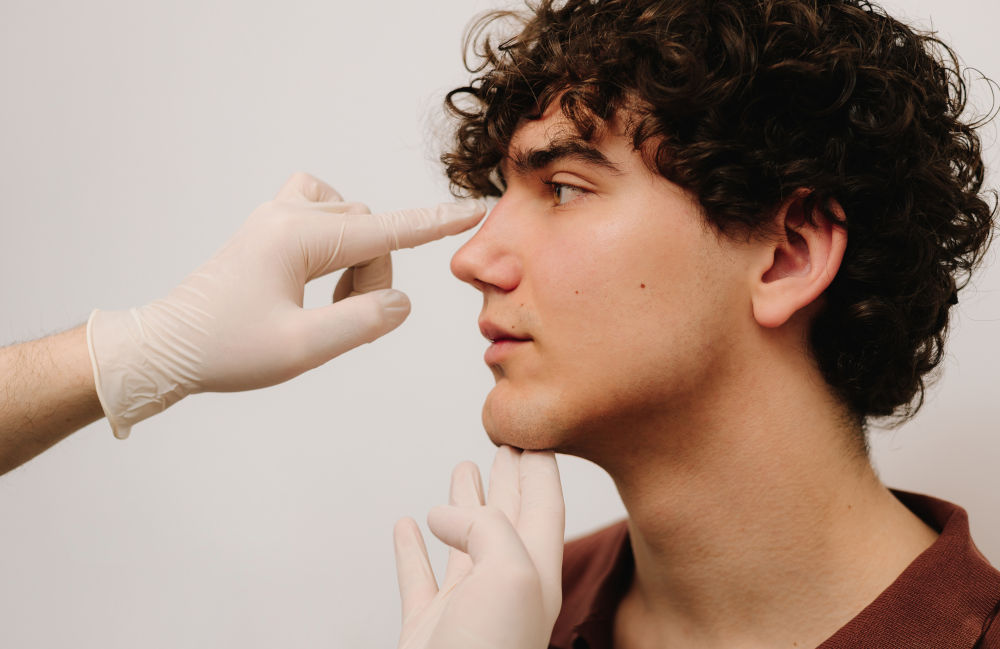
A rhinoplasty consultation can feel exciting and intimidating at the same time. You may know exactly what bothers you about your nose, yet find it difficult to explain the change you want. You may also wonder whether asking about credentials, complications, or cost will seem awkward.
These are appropriate conversations to have. The most useful rhinoplasty consultation questions help you understand what surgery could achieve for your face, how it might affect your breathing, and what the process would involve. They also help your surgeon assess whether your expectations and anatomy are a good match for the procedure.
You do not need to arrive with a surgical plan. Bring your concerns, your priorities, and a willingness to discuss both the possibilities and the limitations.
Key Takeaways
- A consultation should address nasal appearance, facial balance, breathing, medical history, and realistic expectations.
- Ask about the surgeon’s qualifications and experience with cases similar to yours.
- Before-and-after photographs and digital imaging support discussion; neither guarantees your result.
- The recommended technique should reflect your anatomy, goals, and functional needs.
- Recovery questions should cover everyday arrangements, activity restrictions, follow-up care, and gradual healing.
- Request a written cost breakdown and a clear explanation of risks before deciding whether to proceed.
What Happens During a Rhinoplasty Consultation?
The appointment usually begins with a discussion of what you would like to change and why. The surgeon reviews your health history, any previous nasal injuries or operations, and symptoms such as persistent blockage.
An examination considers the bridge, tip, nostrils, skin thickness, internal structures, and the relationship between your nose and the rest of your face. The surgeon then explains which changes may be achievable, which techniques could help, and where limitations exist.
Dr. Rival’s approach to rhinoplasty in Toronto considers both appearance and nasal function. A smaller nose is not necessarily a better-balanced nose, particularly if reducing it would compromise support or airflow.
The consultation should also leave room for recovery, risks, costs, and next steps. If an explanation is unclear, ask the surgeon to describe it in different words or show you what they mean on a photograph.
What Should You Bring to Your Rhinoplasty Consultation?
A little preparation makes it easier to focus on what matters most to you. Bring:
- Your main concerns. Note whether they involve the bridge, tip, nostrils, profile, asymmetry, breathing, or several areas.
- Photographs of your own nose. Choose images that help explain what you notice and which features you want to keep.
- A few reference photographs, if useful. Be ready to explain the specific feature you like rather than requesting another person’s entire nose.
- Your medical information. Include conditions, medications, supplements, allergies, previous operations, and any history of problems with anaesthesia.
- Records from previous nasal surgery. If available, bring operative reports and earlier photographs, especially for a revision consultation.
- Practical questions. Consider work, childcare, exercise, travel, glasses, your budget, and help at home.
It can help to write one sentence describing your priority: “I would like a smoother profile, but I want to keep the appearance of my nose from the front.” That gives the discussion a clearer starting point than “I want a better nose.”
Questions to Ask About Your Surgeon
Credentials establish a surgeon’s training, while experience with similar noses helps you understand how that training relates to your concerns. Useful questions include:
- What qualifications do you hold in facial plastic surgery and nasal function?
- How much of your practice involves rhinoplasty?
- Do you perform both primary and revision procedures?
- What experience do you have with noses and goals similar to mine?
- What makes my case straightforward or more complex?
Dr. Richard Rival is an otolaryngologist–head and neck surgeon whose practice is devoted to facial plastic surgery. He is also a diplomate of the American Board of Facial Plastic and Reconstructive Surgery, with a particular focus on rhinoplasty.
You can also ask where surgery would take place, who would provide your anaesthesia, and how follow-up care is organised. Understanding the care team is part of understanding the procedure.
Questions to Ask About Your Nose and Goals
“I want a smaller nose” can describe several different concerns. A prominent hump, a tip that projects too far, or a broad frontal view may each require a different plan.
Ask:
- Which features are contributing most to the concern I have described?
- What changes would suit my facial proportions?
- How would changing the bridge affect the appearance of the tip, or vice versa?
- What limits do my skin thickness and cartilage structure place on the result?
- Are there changes I want that you would advise against?
Tell the surgeon what you like about your nose as well as what bothers you. You may want to retain a particular profile characteristic, avoid excessive tip rotation, or preserve features connected to your family resemblance.
A useful answer should explain the trade-offs. For example, achieving a very narrow appearance may not be appropriate if it would weaken the structures needed for breathing. The aim is a shared understanding of what can reasonably change and what should be preserved.
Questions to Ask About Before-and-After Photos
Before-and-after photographs are most helpful when you understand the starting anatomy and the patient’s goals. A dramatic transformation in someone with a very different nose may tell you little about your own options.
When reviewing rhinoplasty before and after photos, ask:
- Can you show me patients with similar bridge, tip, skin, or asymmetry concerns?
- Can I see front, side, and angled views?
- Were these primary or revision procedures?
- How long after surgery were the photographs taken?
- Which aspects of these results might be realistic for me?
Look beyond a single attractive profile. Discuss whether the frontal view remains balanced and how the tip relates to the bridge. Photographs can help you understand the surgeon’s work, but a similar starting point does not guarantee an identical outcome.
Questions to Ask About Digital Imaging
It can be easier to discuss a change when you can see it. Advanced digital imaging can help clarify preferences about bridge height, tip position, and overall profile.
Ask:
- Will we use imaging to discuss my goals?
- Which changes in the image are realistically achievable?
- What might differ once the nose has healed?
- How will the image inform the surgical plan?
Treat the image as a conversation about direction. It does not reproduce every aspect of surgery or predict exactly how skin and soft tissue will heal. If you dislike part of a proposed image, explain why before assuming that you and the surgeon want the same result.

Questions to Ask About Open, Closed, or Preservation Rhinoplasty
Online research can make it seem as though choosing a technique is the first decision. In practice, the surgeon needs to understand your nose and goals before recommending how to operate.
Open and closed rhinoplasty describe surgical access. The closed approach uses incisions inside the nose; the open approach includes an additional incision across the tissue between the nostrils. Preservation describes principles for retaining suitable nasal structures and can be used with either access approach.
Ask:
- Why would you recommend open or closed rhinoplasty for my case?
- Am I suitable for preservation techniques?
- Would hump reduction or tip refinement require additional support?
- Would cartilage grafts be needed, and where would that cartilage come from?
- What are the advantages and limitations of your proposed approach for me?
Our guides to open vs closed rhinoplasty and preservation rhinoplasty candidates can help you prepare. The consultation should connect those general concepts to your specific anatomy.
Questions to Ask About Breathing and Function
Even when your main concern is appearance, nasal function deserves attention. Explain whether blockage affects one side or both, whether it changes during the day, and whether you have had an injury or previous nasal treatment.
Ask:
- Is there a structural reason for my breathing difficulty?
- Do my septum or nasal valves need assessment or treatment?
- Could the cosmetic changes we are discussing affect airflow?
- Can functional concerns be addressed during the same operation?
- What temporary congestion should I expect during recovery?
The septum divides the nasal passages, while the nasal valves are narrow areas that influence airflow. Different causes of obstruction may need different treatments, so cosmetic reshaping alone should not be assumed to resolve blockage.
Your surgeon should explain how the plan accounts for rhinoplasty risks and functional concerns, including the possibility of persistent or worsened obstruction.
Questions to Ask About Recovery and Downtime
Recovery planning becomes more useful when it reflects your routine. Someone who works from home has different practical concerns from someone whose job involves lifting, public appearances, or a risk of facial injury.
Bring these rhinoplasty recovery questions:
- How much time should I plan away from work or school?
- When are the splint and any external stitches usually removed?
- When can I return to exercise and heavier physical activity?
- How should I manage glasses if they rest on the bridge?
- What swelling should I expect, particularly around the tip?
- When will it be reasonable to assess the final result?
Dr. Rival’s rhinoplasty recovery timeline explains that early bruising and swelling commonly peak around the second or third day and improve over the following one to two weeks. The nose itself takes longer to reveal its final shape.
Feeling ready to return to work does not mean healing is complete. Ask for guidance based on your planned surgery, and mention any important event or travel date before scheduling.
Arrange Aftercare Before Surgery
Ask who needs to accompany you home, what help you may need initially, and when your follow-up appointments will take place. Also clarify:
- Who should I contact with a concern outside office hours?
- Which symptoms require an urgent call or emergency assessment?
- Will I receive written instructions for medicines, wound care, and activity restrictions?
- How will progress be monitored if I live outside Toronto or Newmarket?
Having these answers beforehand can make the first days at home feel more manageable.
Questions to Ask About Risks and Revision Surgery
A thorough discussion distinguishes expected swelling and bruising from complications. Potential problems include bleeding, infection, altered sensation, breathing difficulties, and an appearance that does not meet the agreed goals. Anaesthesia and general surgical risks also need discussion with the care team.
Ask:
- Which risks are most relevant to my anatomy and health history?
- How will the plan reduce the risk of breathing problems or loss of support?
- What imperfections or asymmetries might remain?
- How do you assess a concern that persists after healing?
- When would revision be considered, and what would that involve?
Aesthetic concerns can include bridge irregularities, uneven nostrils, or more or less correction than intended. Further surgery is generally considered after sufficient healing, although a problem needing prompt treatment should be assessed promptly.
If you are considering revision rhinoplasty in Toronto, ask how previous surgery and scar tissue affect the options. Clarify the practice’s revision policy, including possible additional fees, before your first operation.
Questions to Ask About Rhinoplasty Cost
Ask for an itemised written estimate based on the proposed procedure. A headline price may not explain everything you need to budget for.
Useful questions include:
- Does the quote include the surgeon, anaesthesia, nursing, facility, and surgical supplies?
- Which follow-up appointments are included?
- Are prescriptions, tests, or home-care supplies separate?
- Are applicable taxes included in the total?
- What are the payment, deposit, cancellation, and rescheduling terms?
- If functional treatment is proposed, how would any coverage eligibility be confirmed?
Dr. Rival’s guide to rhinoplasty cost in Toronto outlines typical fee components and explains that the estimate depends on the individual surgical plan. Revision procedures or additional reconstruction may involve different costs.
Ask about available payment or financing arrangements if relevant, including their full terms. If coverage is being explored, request written clarification of which charges would remain your responsibility before making a financial commitment.
Questions You May Be Afraid to Ask, But Should
Some of the most useful questions are also the most direct:
- Do you think surgery is appropriate for me?
- Are my expectations realistic?
- What would make you postpone or advise against an operation?
- What happens if I feel unhappy with the result?
- Can I take time to think and return with more questions?
You do not need to sound knowledgeable or agree immediately with every suggestion. A recommendation against a particular change may reflect concern for your anatomy or long-term function. Ask the surgeon to explain the reasoning so you can make an informed decision.
Red Flags During a Rhinoplasty Consultation
You should feel able to ask questions and consider the answers without pressure. Pause and seek clarification if:
- A perfect result or an exact match to an image is guaranteed.
- Risks are dismissed or breathing concerns are overlooked.
- The recommended approach is not explained.
- Recovery requirements and limitations remain unclear.
- The quotation leaves significant charges unexplained.
- You feel rushed into booking before understanding the plan.
An unanswered question may be something the office can clarify afterwards. However, if important concerns remain unresolved, it is reasonable to arrange another discussion or seek a second opinion before proceeding.
Frequently Asked Questions
What questions should I ask at a rhinoplasty consultation?
Prioritise the surgeon’s relevant experience, realistic changes for your anatomy, breathing, the recommended technique, recovery, risks, and total cost. Ask what surgery cannot reliably achieve as well as what it may improve.
Should I bring photos to my rhinoplasty consultation?
Yes. Images can help explain what you like and dislike. Bring photographs of your own nose and a few references if useful, while recognising that another person’s nose cannot simply be copied onto your face.
Will digital imaging show exactly what my result will look like?
No. Imaging helps you and the surgeon discuss possible changes. The final appearance also depends on your anatomy, the operation, and healing, so a simulation should not be treated as a promised outcome.
How do I know if I am a good candidate for rhinoplasty?
The surgeon assesses your nasal anatomy, facial proportions, breathing, health history, and expectations. Candidacy also involves understanding the limitations and being able to follow the preparation and recovery plan.
Should I discuss breathing if I only want cosmetic changes?
Yes. Your surgeon needs to understand your baseline breathing and how the proposed reshaping could affect nasal support. Mention congestion, previous injuries, and earlier nasal procedures even if appearance is your main priority.
How much does rhinoplasty cost in Toronto?
Costs vary with the surgical plan, complexity, surgeon, facility, and anaesthesia. Request a personalised written quote and check the inclusions, exclusions, taxes, and follow-up arrangements rather than relying on an advertised starting price.
What if I am nervous about asking too many questions?
Bring a written list and identify your main priorities. It is reasonable to ask for clearer explanations or a follow-up discussion. You should understand the procedure and its implications before committing to surgery.
Do I need to decide on surgery during the consultation?
No. You can review the proposed plan, consider the recovery and financial commitments, and ask further questions. A consultation can also help you decide that surgery is not right for you at this time.
How to Know If You Are Ready to Move Forward
After the consultation, you should understand the proposed changes, their limitations, the recommended approach, and how breathing will be considered. You should also have a practical recovery plan, a clear estimate, and answers about risks and follow-up care.
If you are preparing for a rhinoplasty consultation in Toronto or Newmarket, Dr. Richard Rival can help you explore what is realistic for your anatomy and goals. Take the time you need to understand your options before deciding.